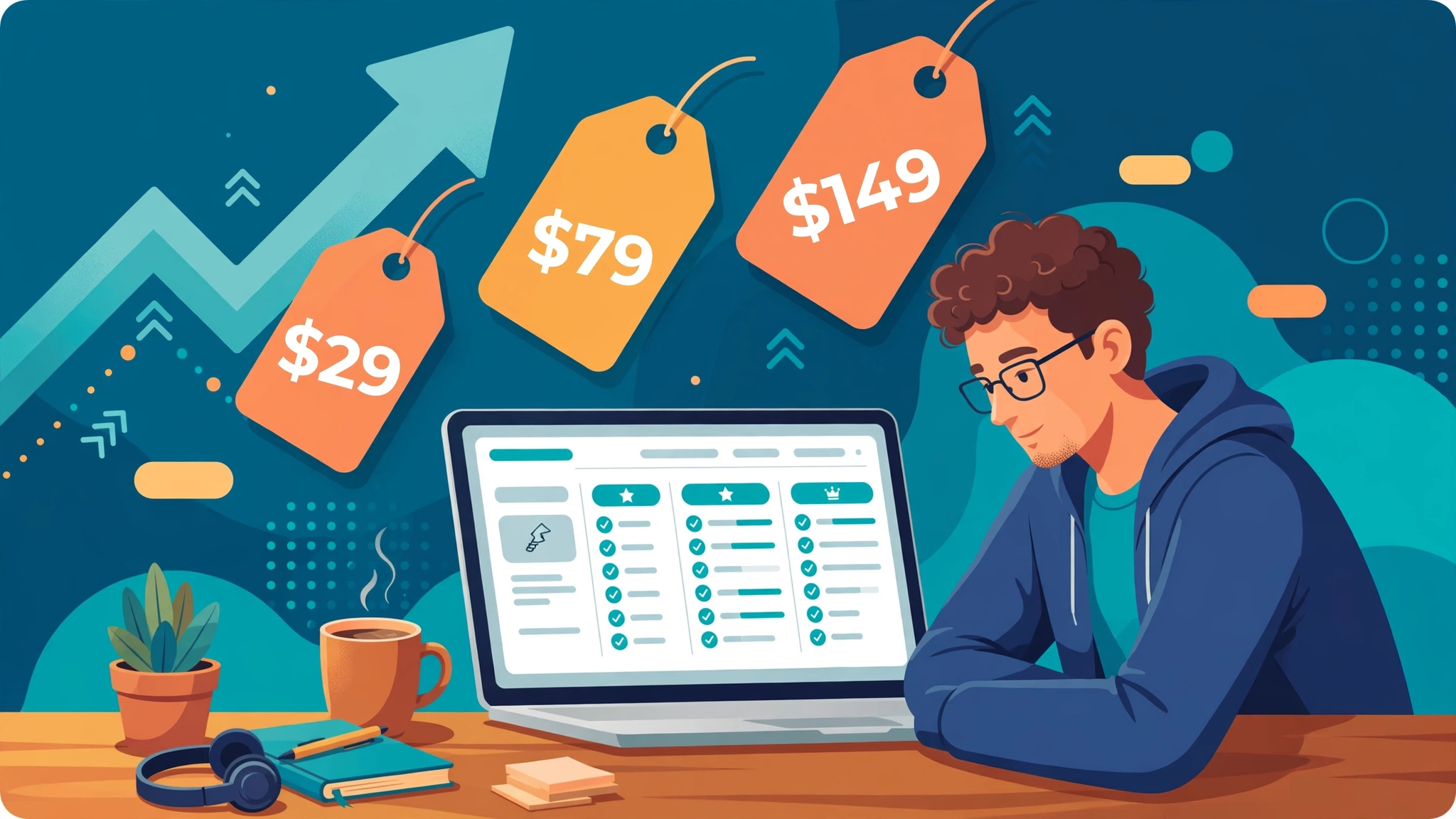
Pricing your first SaaS product feels like guessing the future with money on the line. Charge too much and the early adopters you need for feedback disappear. Charge too little and you attract bargain-hunters who churn the moment you raise rates — while training the market to undervalue your work.
The short answer: To price a SaaS product for early customers, start with value-based pricing. Calculate what your product saves or earns the customer compared with their current alternative, set your launch price at roughly one-tenth of that value, and give your first 10–20 customers an early-bird “founder’s rate” — typically 30–50% off, locked in — in exchange for honest feedback, testimonials, and referrals. Launch with one simple paid tier, and plan to review the price every six months.
This guide shows you exactly how to do that: how to calculate your first price with zero customers, which pricing model fits an MVP, how early-bird discounts really work, when and how to raise prices, and the mistakes that cost early founders the most.
Key takeaways
- Your first price is a hypothesis, not a verdict. Ship a defensible number, learn from real buying behavior, and iterate.
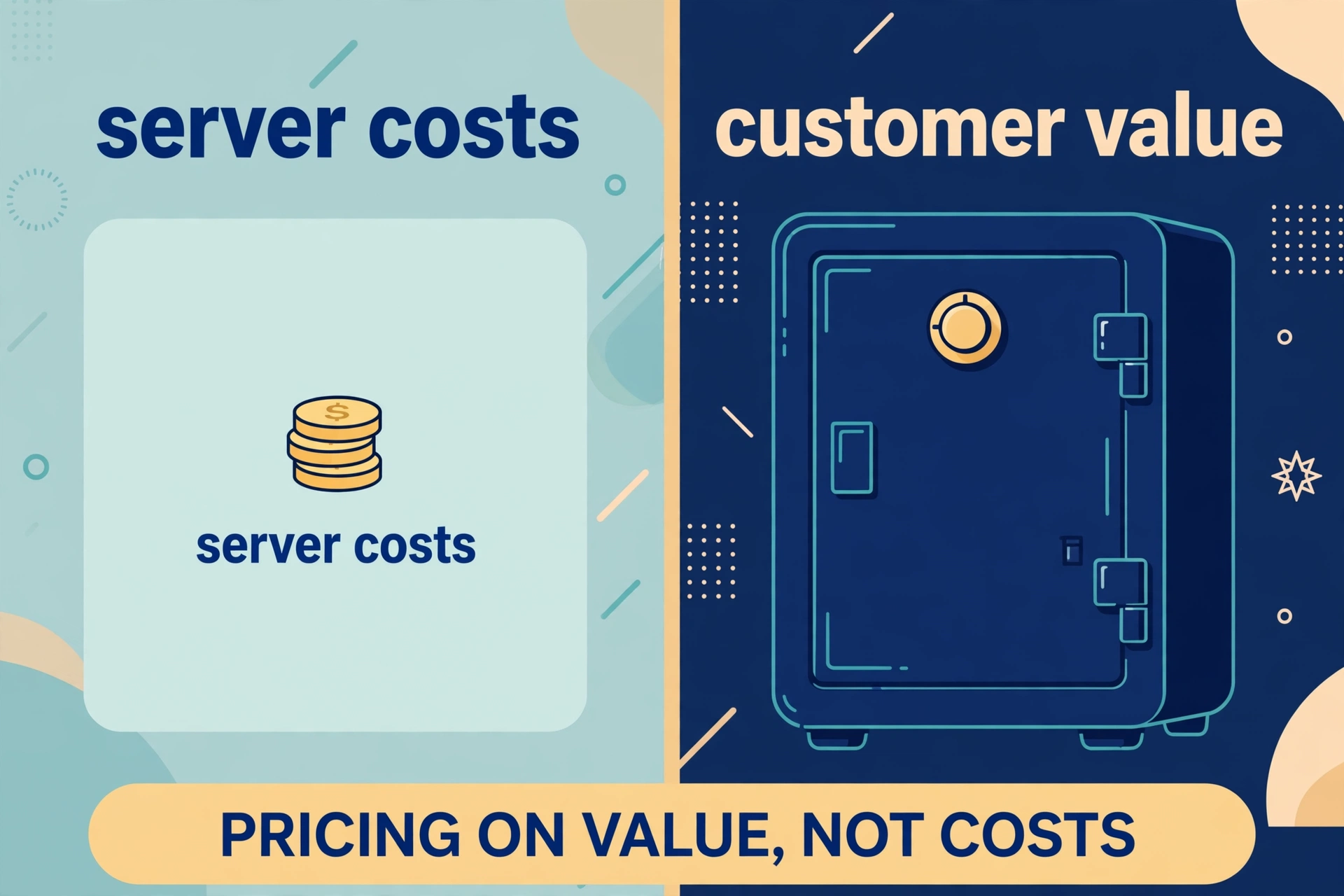
- Price on value, not costs. Customers pay for the problem you remove, not your hosting bill.
- Charge from day one. Paying customers give the honest feedback that free users won’t.
- Reward early believers. A locked-in founder’s rate buys goodwill, feedback, and case studies.
- Revisit pricing every six months. Your price should grow as your product’s value grows.
Why does your first price matter more than a “perfect” price?
There is no perfect launch price — there is only a defensible starting point and a disciplined plan to improve it. Founders who wait for pricing certainty usually wait too long; the market teaches you faster than any spreadsheet.
Your first price also decides who your early customers are. Free or near-free pricing fills your inbox with casual users whose feedback is vague and whose loyalty is thin. A real price — even a modest one — filters for people with a painful problem and a budget, which is exactly who you need while finding product-market fit.
Atlassian’s pricing team makes this point well in their eight SaaS pricing principles: early on, they advise companies to “price for volume” and err on the side of pricing too low rather than too high, because gaining users and learning beats squeezing revenue per user at this stage. You can always raise prices later — you can’t retroactively buy back months of learning from the wrong customers.
How this guide was researched: For this rewrite, we reviewed the ten highest-ranking articles on Google for “how to price a SaaS product for early customers” — including in-depth guides from Stripe, Atlassian, Pragmatic Institute, and Schematic — and scored each on three criteria: (1) does the advice work before you have revenue data, (2) does it tell you how to set the actual first number rather than just describing models, and (3) does it cover what happens after launch. Most guides explain pricing models thoroughly but skip the founder’s real question: what number do I charge my first ten customers? That gap is what this guide is built to fill.
What is value-based pricing, and why should early founders start there?
Most founders price using one of three approaches. Only one of them is built for software:
| Approach | How it works | Why it fails early SaaS |
|---|---|---|
| Cost-plus | Add a margin on top of your hosting and operating costs | Customers don’t care about your costs. This method ignores the value you create and almost always underprices software. |
| Competitor-based | Match or slightly undercut rival pricing | You don’t know their margins, funding, or strategy. It also trains buyers to choose on price alone — a race to the bottom. |
| Value-based | Price according to the economic value the customer receives | Takes more research up front — but it’s the only method that lets your price grow with the value you deliver. |
Value-based pricing wins for early SaaS for a simple reason: your costs are tiny, but the outcome you produce can be large. A $50/month tool that replaces a $2,000/month agency retainer isn’t “worth” $50 because it costs you $3 to run — it’s worth a share of the $2,000 problem it removes.
Value is subjective — and that’s an advantage. The same five hours saved per week is worth thousands to a founder and far less to an intern. Early on, price for the buyer whose pain is sharpest and whose budget is real, not for the broadest possible audience.
Anchor on the alternative, not your costs. Ask every prospect: “What would you do if this product didn’t exist?” The answer — a freelancer, an agency, ten hours of manual spreadsheet work, a clunky competitor — is your price anchor. If the alternative costs $500 a month, charging $49 feels like a bargain, not an expense.
One more distinction to lock in early: your value metric (what creates value for the customer, e.g., leads generated) is not always your pricing metric (what you charge for, e.g., campaigns run). Choose a pricing metric the customer can predict and control — surprise bills kill early trust faster than high prices do.
For the full landscape of approaches this fits into, see our guide to the most effective SaaS pricing strategies.
How do you calculate your first price before you have any customers?
This is the step most pricing guides skip. Here is a five-step method that works with zero revenue data:
Step 1: Name the job and the current alternative
Write one sentence: “[Customer] currently [does X manually / pays Y for Z] to solve [problem].” Be specific. “Marketing teams” is not a customer; “a 5-person agency that manually builds client reports in Google Sheets every Friday” is.
Step 2: Put a dollar figure on the alternative
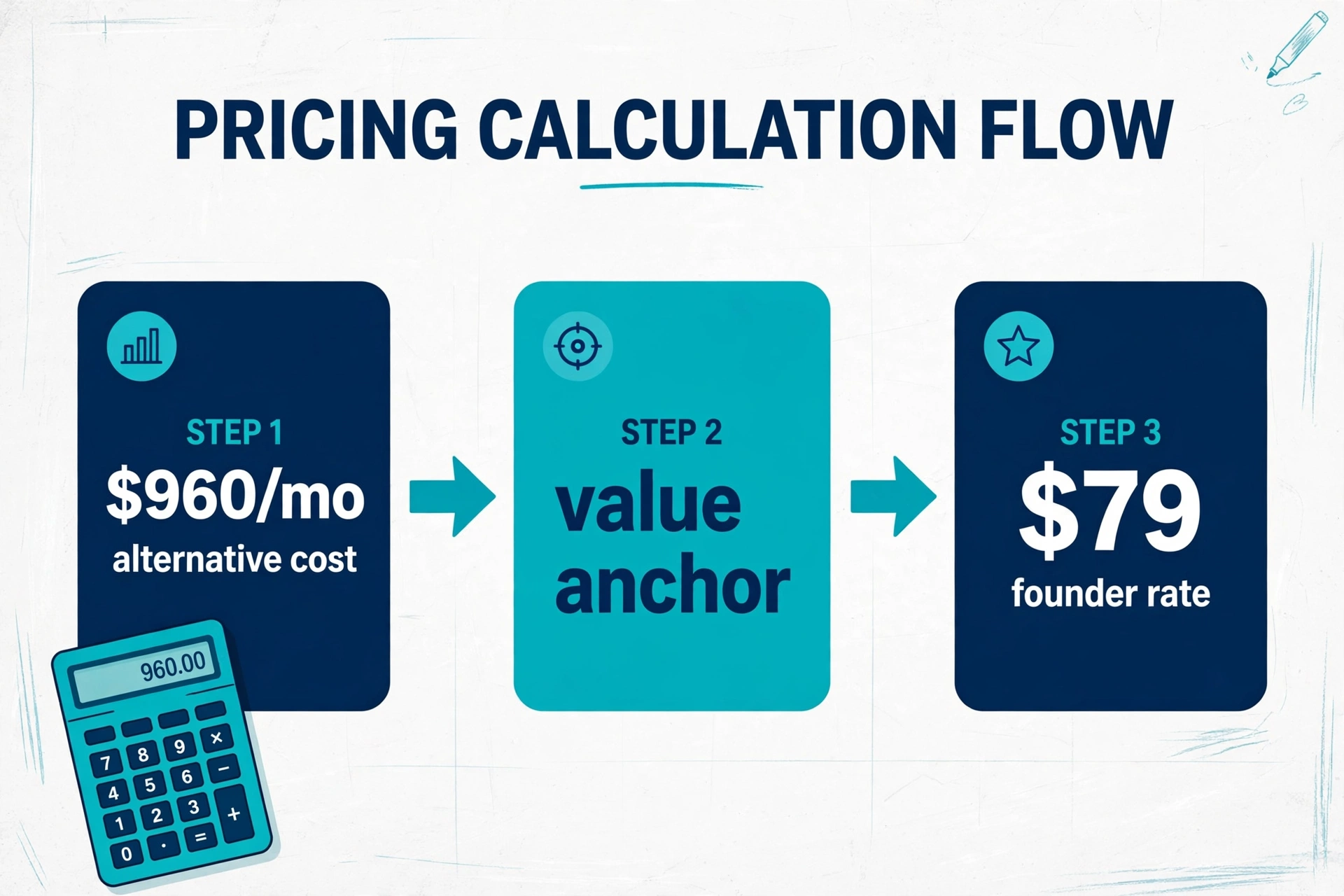
Price the alternative three ways and take the most credible: (a) time saved × the buyer’s hourly cost, (b) the freelancer or agency quote for the same outcome, (c) the competitor’s price for the closest substitute. This number is your value anchor.
Step 3: Choose your value metric
Pick the unit that grows as the customer gets more value: seats for collaboration tools, projects or clients for agency tools, contacts for CRMs, API calls or credits for infrastructure. Your launch tier should charge along this metric — it’s what makes future price increases feel fair.
Step 4: Apply the one-tenth starting anchor, then sanity-check it in conversations
A common founder rule of thumb: set your launch price at roughly one-tenth of the monthly value you calculated in Step 2. If your tool saves $1,000/month of agency cost, a $79–$99 launch price is defensible; if it saves $200/month of busywork, start near $19–$29.
Then validate with 10–15 prospect conversations. Don’t ask “would you pay $X?” — ask willingness-to-pay questions: at what price would this feel too expensive, like a bargain, or so cheap you’d doubt it works? If everyone says “bargain,” your anchor is too low.
Step 5: Launch with one simple tier
One plan, one price, monthly billing. Every extra tier, add-on, and billing option is a conversion killer at this stage. As Pragmatic Institute’s Jim Semick advises, keep early pricing to a small number of simple packages — GoToMeeting famously launched with a single flat $49/month “all you can meet” plan, and simplicity was a feature. You can read his full breakdown in Pragmatic Institute’s SaaS pricing guide.
Worked example (illustrative): Say your tool saves a freelance designer 4 hours a week of manual formatting. At a $60/hour billable rate, that’s about $960/month of value. One-tenth gives a $96 anchor — so a $79 early-bird price (see below) or a $99 standard price is easy to defend on a sales call: “It pays for itself if it saves you two hours a month.”
Which pricing model should your early-stage SaaS use?
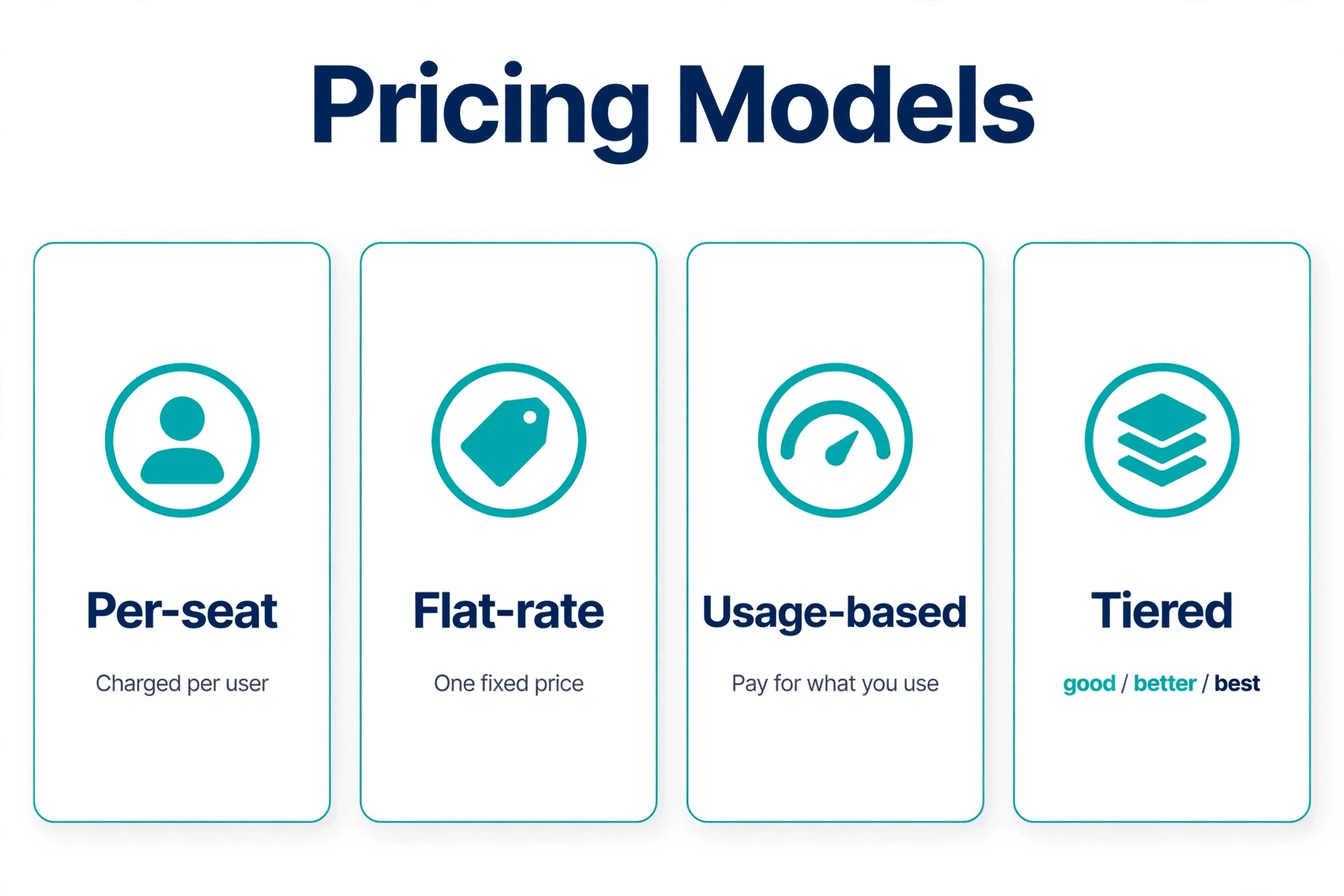
How you charge matters as much as how much. Here is how the main models compare for a product with its first customers:
| Model | Best for | Pros | Cons | Early-stage verdict |
|---|---|---|---|---|
| Per-seat | Collaboration tools | Easy to understand and forecast | Discourages team growth; invites login-sharing | Solid default for team products |
| Flat-rate | Simple tools with one clear job | Almost zero friction to buy | Leaves money on the table as customers grow | Excellent for MVPs — the simplest price to sell |
| Usage-based | APIs, infrastructure, AI features | Low entry barrier; scales with customer success | Unpredictable revenue and surprise bills | Use it when your costs scale per use; add caps so bills stay predictable |
| Tiered (good / better / best) | Most SaaS products | Captures different segments; natural upsell path | Hard to balance features across tiers before you know what drives upgrades | Launch with ONE tier; add tiers once usage data shows where the upgrade triggers are |
| Free trial (14–30 days) | Products with fast time-to-value | Lowers signup friction; creates urgency | Attracts non-buyers; adds support load | The best default for early B2B SaaS — more on this below |
One trend worth watching: hybrid models (a base fee plus usage) are the fastest-growing approach in SaaS — adoption rose from 27% to 41% of companies in 2025, according to Growth Unhinged data summarized by Schematic. For early founders, the lesson is simpler: start with the plainest version of your model and add the hybrid layer only when customers ask for it. Stripe’s SaaS pricing models guide is a solid reference for the full taxonomy.
How do early-bird and design-partner discounts actually work?
Your first 10–20 customers aren’t just revenue — they’re your research department. The design-partner model treats them that way: a meaningful discount in exchange for a real commitment to help you build.
The mechanics that work:
- Size: 30–50% off your standard launch price. Enough to feel like a genuine reward, not so deep that the price becomes meaningless.
- Scope: lock it in as a “founder’s rate” for the life of the account. Grandfathering is the whole point — it’s what makes early believers feel smart for betting on you.
- Cap it: limit the offer to your first 10–20 customers or a fixed time window. Scarcity is honest here — you can only onboard a handful of design partners well.
What to ask in return — a discount without expectations is just cheap pricing. Make the rate contingent on:
- A 30-minute feedback call each month for the first quarter
- A testimonial and permission to use their logo once they see results
- Introductions to two peers who have the same problem
Be transparent about the trade. Tell them plainly: “You’re getting 50% off forever because I want your brutal honesty while we build this together.” Put the expectations in a short email — not a legal contract, just shared clarity. Founders consistently report that customers acquired this way give sharper feedback, tolerate rough edges, and become the case studies that sell your next hundred accounts.
One caution: keep the discounted cohort small and high-touch. Concierge onboarding for twenty design partners is a growth strategy; concierge onboarding for two thousand is a support-ticket avalanche.
Should you offer a free trial, freemium, or charge from day one?
Each acquisition model teaches you something different:
| Approach | When it works early | Watch out for |
|---|---|---|
| 14-day free trial | Product delivers value in the first session or two | Attracts tire-kickers; needs onboarding to convert |
| Freemium | Viral or network-effect products with near-zero marginal cost | Free users rarely give the feedback quality you need to find product-market fit |
| Paid from day one | Niche B2B tools with a clear, expensive alternative | Slower initial signups — but every signup is a buying signal |
| Paid pilot | Higher-ticket B2B; 30–90 day paid evaluation | Requires founder-led sales effort per deal |
For most early B2B SaaS, a 14-day free trial is the best default: it lowers signup friction while creating urgency, and it filters for people willing to eventually pay. Freemium can wait until you have a self-serve engine and know exactly which free behaviors predict upgrades. And remember the testing principle from Pragmatic Institute’s guide: experiment with real money early and often — opinions about pricing are cheap, but card numbers don’t lie.
When and how should you raise your prices?
Your first price is temporary by design. These are the signals it’s time to raise it:
- New customers stop negotiating — nobody mentions price on sales calls anymore
- Your close rate climbs well above what’s normal for your market, yet growth feels “too easy”
- You feel embarrassed by how much value you deliver for the price — that feeling is data
- Churn stays flat or falls after previous increases, or a waitlist starts forming
How to raise prices without burning trust:
- Raise for new customers first. Change the public price; existing customers stay where they are. This is the lowest-risk increase you’ll ever make.
- Grandfather your early birds — permanently. Their locked founder’s rate was the deal. Honoring it turns early adopters into lifelong advocates.
- Give 30–60 days’ notice before any increase touches existing accounts, and explain what’s improved since they signed up. Atlassian’s pricing team flags this explicitly: price increases are sensitive, so over-communicate.
- Review on a schedule. Put a pricing review on the calendar every six months. Pricing is a living part of the business, not a one-time decision.
What pricing mistakes should early SaaS founders avoid?
- Pricing from your costs. Cost-plus pricing anchors you to the smallest number in the room — your hosting bill — instead of the largest one: the customer’s problem.
- Pricing too low to “get traction.” Ultra-low prices attract price-sensitive users who demand the most support and churn first — and they signal the product isn’t serious.
- Calculator pricing. If a prospect needs a spreadsheet to estimate their bill, they’ll bounce. Early pricing should be explainable in one sentence.
- Copying a competitor’s price. You don’t know their cost structure, funding runway, or packaging strategy. Their price is optimized for their business, not yours.
- Never revisiting the price. The price that was right for an MVP with three features is wrong for a mature product with thirty. Calendar the review.
- Unsustainable lifetime deals. A lifetime deal can fund development, but every LTD buyer becomes a permanent support cost with zero recurring revenue. If you run one, cap the seats hard and price it like the liability it is.
How did successful SaaS companies price their first customers?
Short, public case studies — with the lesson each one teaches:
Slack: price the workflow, not the software
Before its public launch, Slack worked inside real teams as a design partner — watching how people actually communicated and shaping packaging around team size and usage rather than feature checklists. The lesson: your first customers buy an outcome inside their workflow. Price the outcome, and let early usage teach you which metric to charge on.
Buffer: treat early pricing as an experiment
Buffer famously ran its early pricing tests in public, changing plans and writing openly about what customers actually paid for versus what they said they’d pay. The lesson: treat your first price as an experiment with a sample size. Measure conversion and card numbers, not opinions.
Groove: let customer conversations draw the tiers
Groove documented its early journey — including pricing tests — on its company blog, and the pattern was consistent: the tiers that worked came from asking buyers what they’d pay more for, not from internal brainstorming. The lesson: your packaging should be written in your customers’ words. Ask “what would you pay extra for?” before you draw tier lines.
Notice the common thread: none of these companies got pricing right by thinking harder in a room. They priced, watched real behavior, and adjusted. For a broader survey of approaches once you’re past the MVP stage, our guide to SaaS pricing strategies covers tiered, usage-based, and hybrid models in depth.
Frequently asked questions
Should I offer a lifetime deal (LTD)?
Only if you need immediate cash to fund development — and even then, cap it hard: a fixed number of seats sold in one short window. An LTD converts future recurring revenue into a one-time payment while the support obligation lasts forever, which is why most founders who run uncapped LTDs regret it within a couple of years.
Is a free trial or freemium better for an early-stage SaaS?
For early B2B SaaS, a 14-day free trial usually wins: it creates urgency and filters for buyers. Freemium makes sense later, once you have a self-serve engine and data on which free behaviors predict upgrades. Charging from day one is best when the alternative is clearly expensive — every signup is then a real buying signal.
When should I raise my prices?
When new customers stop pushing back on price, your close rate feels “too easy,” or you feel embarrassed by the value-to-price gap. Raise for new customers first, grandfather early adopters permanently, and give existing accounts 30–60 days’ notice.
How do I handle feature requests from early users?
Put a price on the request: “If I built this, would you pay $20 more per month for it?” If the answer is no, it’s a nice-to-have, not a roadmap item. This single question separates feedback that grows revenue from feedback that grows your backlog.
Should I publish pricing on my website or hide it behind a sales call?
Publish it. Transparent pricing builds trust — Atlassian’s pricing principles argue every customer should get your best price without negotiation games — and it filters out bad-fit buyers before they cost you a sales call. Hide pricing only when every deal is genuinely custom, which is rare before enterprise scale.
What if a prospect says the price is too high?
Don’t discount reflexively. Ask which alternative they’re comparing you against, walk them through the value math (their alternative’s cost versus your price), and offer the early-bird founder’s rate only in exchange for the feedback commitments above. If they still balk, they’re telling you about their budget — or that the pain isn’t sharp enough yet.
Final thoughts: price is a pulse, not a statue
Don’t stress about getting pricing “perfect” on day one. Your early customers are buying your vision as much as your code — treat them like partners, be fair in the value exchange, and let real buying behavior set your second, third, and tenth price. And if you’re still shaping the product itself, start with validating your SaaS idea before launch — the willingness-to-pay conversations in that process double as your first pricing research.