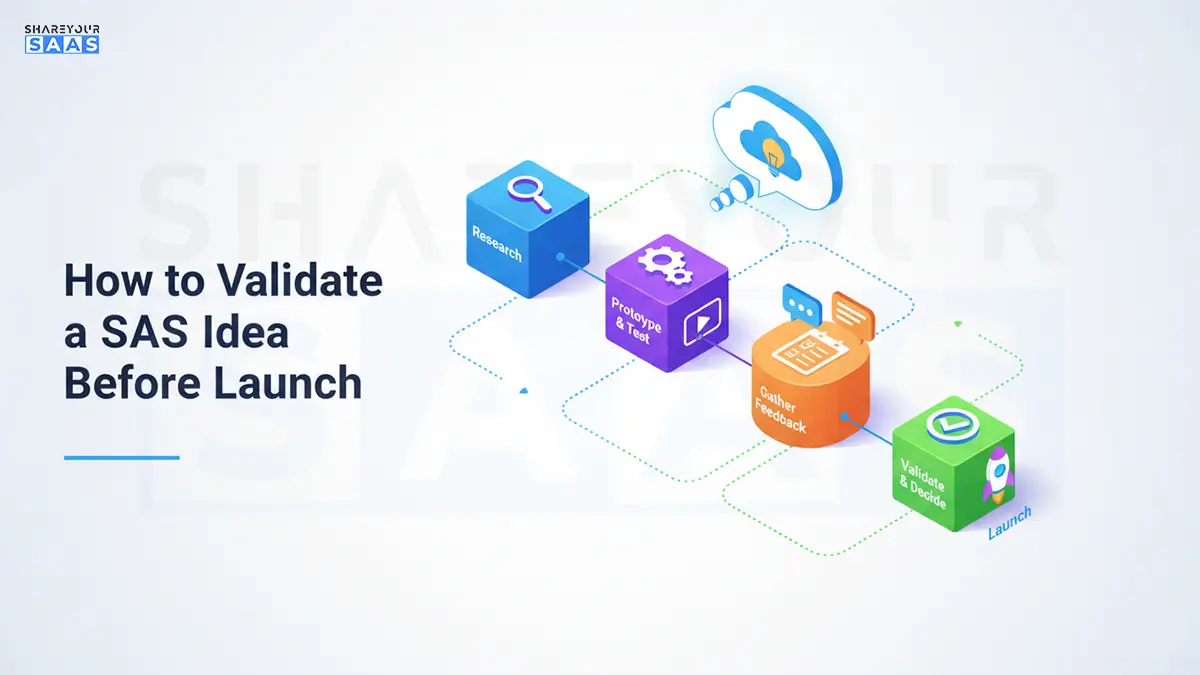
Most SaaS products fail — not because the founders lacked technical skill, but because they built something nobody actually wanted to pay for. And the question is, How to Validate a SaaS Idea Before Launch, Validating a SaaS idea before launch is the single most important step between a promising concept and a product that generates real revenue. So, it’s not glamorous work. It’s not about wireframes or choosing your tech stack. It’s about getting ruthlessly honest answers from the real world before you spend a dollar on development.
This guide walks you through exactly how to do that — from raw idea to validated proof of demand.
Key Takeaways
- Validation happens before you write a single line of code.
- Talk to at least 20–30 potential customers, not just friends and family.
- A landing page with a waitlist or pre-sale converts better than any survey.
- Willingness to pay is the only true signal of a validated idea.
- Competitor existence is a good sign, not a red flag — it proves demand.
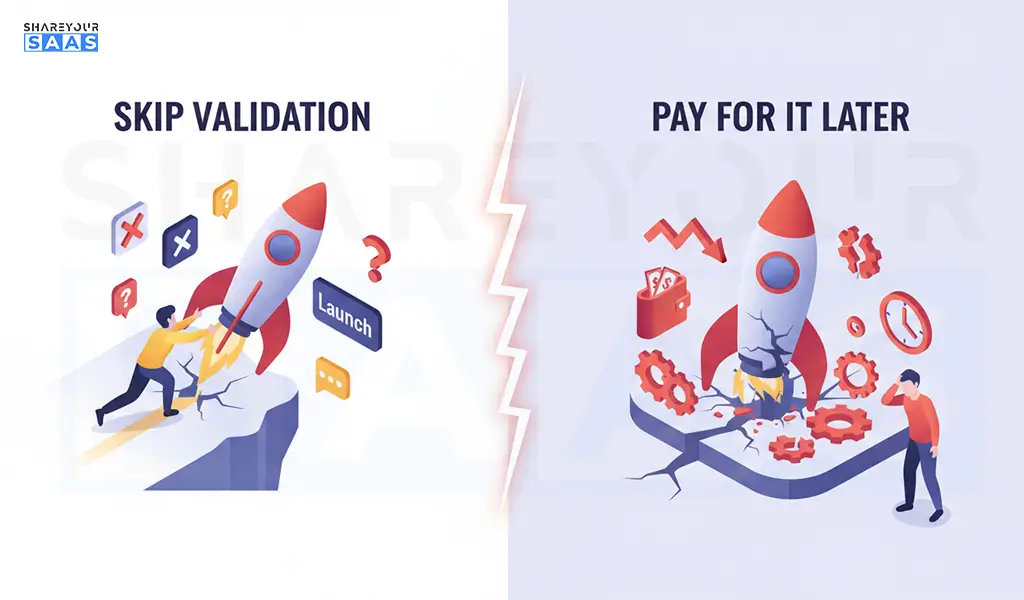
Why Most Founders Skip Validation (And Pay for It Later)
There’s a seductive logic to skipping validation: “I know this problem exists. I’ve experienced it myself. People will definitely pay for a solution.” The technical term for this is founder bias, and it’s responsible for billions of dollars of wasted development effort every year.
The CB Insights post-mortem on failed startups consistently shows “no market need” as the #1 reason companies shut down — accounting for 35% of failures. The scary part? Most of those founders were smart, hard-working people who were simply in love with their idea instead of in love with the problem.
Validation isn’t about killing your idea. It’s about stress-testing it with reality before reality does it for you — on a much more expensive timeline.

Step 1: Define the Problem with Surgical Precision
Before you validate your SaaS idea, you need to be extremely clear about the problem you’re solving. Vague problems produce vague products.
Ask yourself three questions and write down the answers:
- Who specifically experiences this problem? (Not “small businesses” — be more precise. “E-commerce store owners running less than $500K/year in revenue who manage their own inventory.”)
- How often do they experience it? (Daily friction beats occasional annoyance.)
- What are they currently doing to solve it? (Spreadsheets? Manual processes? A competitor?)
That last question is especially important. If your target customer has no current workaround, the problem might not be painful enough to warrant a paid solution. People tolerate inconvenience. They pay to eliminate pain.
The “Hair on Fire” Test
Paul Graham of Y Combinator famously described the ideal startup customer as someone with their “hair on fire” — someone so desperate for a solution they’ll try almost anything. Your goal at this stage is to determine whether your target user’s problem rises to that level of urgency.
If they’re mildly annoyed, you might have a feature. If they’re losing sleep over it, you might have a business.
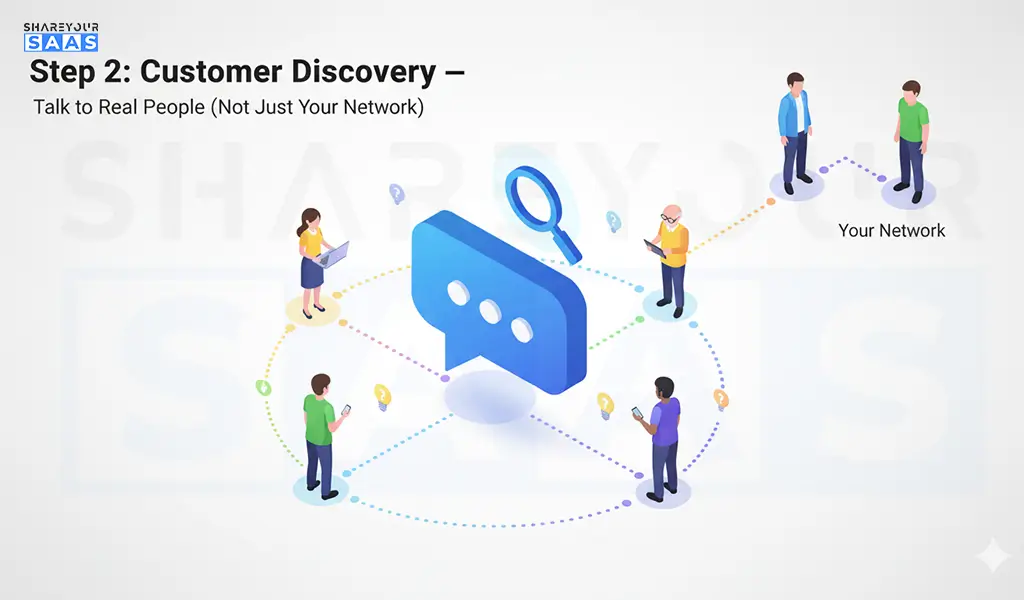
Step 2: Customer Discovery — Talk to Real People (Not Just Your Network)
This is where most founders cut corners. Sending a survey to your LinkedIn connections is not customer discovery. Getting 15 minutes on the phone with a stranger who fits your target profile? That is.
Aim for 20 to 30 conversations with people who match your ideal customer profile (ICP). Cold outreach works. Post in relevant Slack communities, Reddit threads, or industry Facebook groups. Offer a $10 Amazon gift card for their time if needed. The data you get is worth ten times that.
What to Ask (and What NOT to Ask)
The classic mistake is asking people if they’d use your product. They’ll say yes to be polite. Instead, use the Mom Test framework (developed by Rob Fitzpatrick) — ask questions that force them to reveal reality, not hypotheticals.
Good questions:
- “Walk me through how you currently handle [problem].”
- “What’s the most painful part of that process?”
- “How much are you spending — in time or money — on this right now?”
- “Have you tried any tools or workarounds? What happened?“
Questions to avoid:
- “Would you use an app that…?”
- “Do you think this is a good idea?”
- “Would you pay for something like this?”
Listen more than you talk. Take notes. Look for patterns across multiple conversations — repeated frustrations, identical workflows, and shared language around the problem. That consistency is your validation signal.
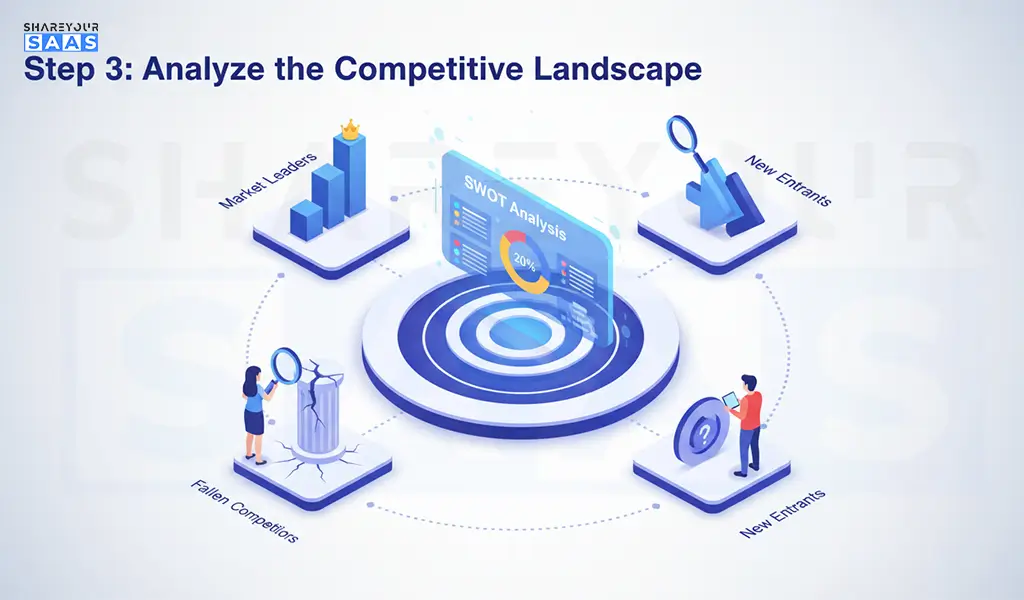
Step 3: Analyze the Competitive Landscape
A lot of first-time founder’s panic when they discover competitors. This is backwards thinking. Competitors mean a market exists. The real danger is building something with zero competition — that usually means zero demand.
Spend time mapping out who else is solving this problem. Look at their pricing pages, their G2 or Capterra reviews, their Reddit mentions, and their product changelogs. You’re not trying to copy them. You’re looking for gaps — the complaints customers have that aren’t being addressed, the segments being ignored, and the pricing tiers that are either too expensive or too basic.
Competitor Analysis Checklist
- Who are the top 3–5 players in the space?
- What do customers love about them? (G2/Capterra reviews)
- What are the most common complaints?
- Which customer segments do they underserve?
- What’s their pricing model — seat-based, usage-based, flat rate?
- Are there any obvious feature gaps?
Your differentiation doesn’t have to be revolutionary. It can be as simple as being built specifically for one niche (e.g., a project management tool just for freelance designers) or offering a significantly simpler experience for a segment that finds existing tools too complex.
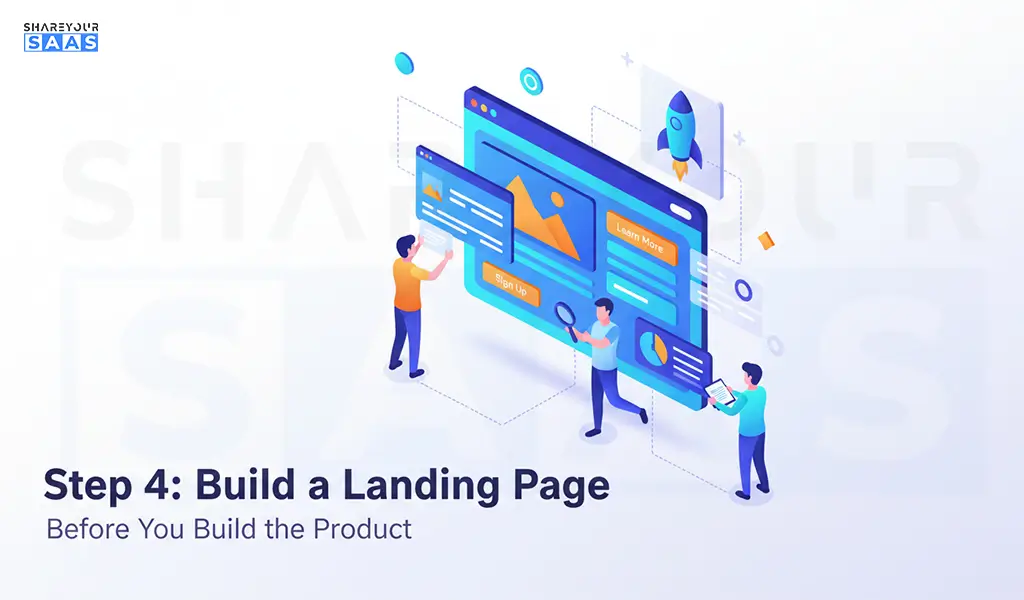
Step 4: Build a Landing Page — Before You Build the Product
This is one of the most powerful and underused validation tactics in the SaaS world. A landing page lets you test real demand with real traffic before writing a single line of code.
Your landing page doesn’t need to be fancy. It needs three things:
- A clear, specific headline that states who you help and what problem you solve. (“The client reporting tool built for solo consultants — no more 3-hour spreadsheet updates.”)
- A concrete call to action — an email signup for early access, a waitlist, or ideally a pre-order with a deposit.
- Enough detail to make a visitor’s decision meaningful. If someone signs up after reading three bullet points, their signal isn’t very strong. Give them enough information that their opt-in actually means something.
Drive traffic to this page through targeted channels: Reddit posts in relevant communities, cold outreach via LinkedIn or email, paid search ads for your core keyword, or posting in niche Slack groups and forums.
The Pre-Sale Test
If you really want to know whether someone will pay, ask them to pay. Offer founding member pricing — 50% off the eventual subscription — to the first 50 or 100 people who sign up before launch. Even $9 or $19 upfront is meaningful. It separates the curious from the committed.
Patrick McKenzie (Patio11) has written extensively about this. Getting even 10–20 paying pre-customers before you build is one of the strongest validations signals you can get.
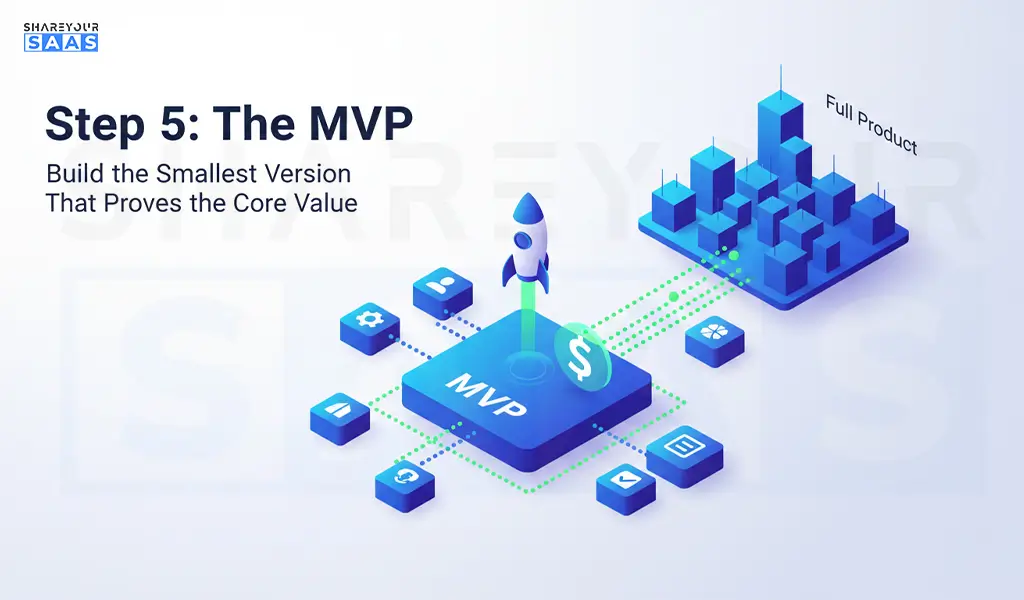
Step 5: The MVP — Build the Smallest Version That Proves the Core Value
A Minimum Viable Product is not a half-built product. It’s the smallest possible version of your solution that delivers the core value proposition to a specific customer segment.
Dropbox famously validated their idea with a demo video before they built anything. Buffer’s founder Joel Gascoigne set up a simple landing page explaining the product concept, a pricing page, and a “sorry, not ready yet” message — and watched how many people clicked through to pricing. That was enough to confirm demand.
Your MVP might not even be software. It could be a manual service delivered via email or zoom, with you doing the work behind the scenes to simulate what the software would eventually automate. This is sometimes called a “Wizard of Oz” MVP, and it’s a legitimate way to test whether customers value the outcome before you build the machinery.
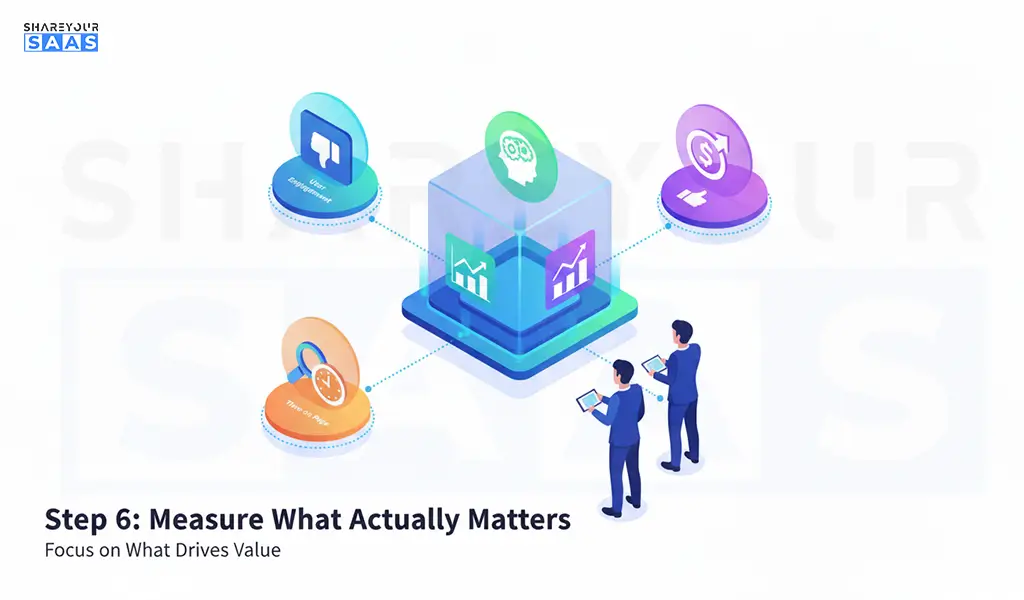
Step 6: Measure What Actually Matters
Once your landing page is live or your MVP is in front of early users, you need to track the right metrics. Vanity metrics — like total page views or social media followers — tell you almost nothing about product-market fit.
What to actually watch:
- Email conversion rate on your landing page (above 5–10% is a healthy signal for targeted traffic)
- Pre-sale conversion rate (how many visitors actually buy or deposit)
- Activation rate in your MVP (do users complete the core action the product is designed for?)
- Retention signals — do early users come back? Do they refer others?
- Qualitative feedback — what language do they use to describe the value they got?
That last point matters more than most founders realize. When customers describe your product’s value in their own words, you’re getting market research and marketing copy at the same time.
Real-World Example: How Superhuman was Validated Before Scaling
Superhuman, the premium email client, didn’t launch publicly for years. Founder Rahul Vohra spent that time hand-onboarding each user, running deep surveys, and obsessively measuring what he called the “product-market fit score” — asking users “How disappointed would you be if you could no longer use Superhuman?” and aiming for at least 40% to answer “very disappointed”.
They only scaled when that threshold was consistently hit. The result? A product with famously high retention and a $30/month price point in a market where most email clients are free.
The takeaway isn’t to copy Superhuman’s approach exactly. It’s that disciplined, systematic validation before scaling that separates products that stick from products that churn out.
Common Validation Mistakes to Avoid
Asking friends and family. They love you. They’ll lie to protect you. Find strangers.
Confusing interest with intent. Someone saying “that sounds cool” is not validation. Someone handing you a credit card number is.
Building too much before validating. Every feature you build before you’ve validated the core value proposition is a potential waste of time. Stay lean.
Targeting too broad an audience. “Small businesses” is not a target market. Narrow down until your ICP feels almost too specific — that specificity is what makes your early marketing work.
Ignoring the pricing conversation. You need to know what people will actually pay, not just whether they want the product. Test at least two or three price points on your landing page or pre-sale.
Validation Methods: A Quick Comparison
| Method | Cost | Time | Signal Strength |
| Customer interviews | Low | Medium | High (qualitative) |
| Landing page + waitlist | Low | Low | Medium |
| Pre-sale / deposit | Low | Low | Very High |
| Wizard of Oz MVP | Medium | Medium | High |
| Full MVP launch | High | High | Very High |
| Paid ads + landing page | Medium | Low | High |
There’s no single right method. The best approach is usually combining customer interviews (for qualitative depth) with a landing page or pre-sale test (for quantitative proof).
Internal Resources Worth Reading
Once you’ve validated your SaaS idea, the next steps involve building, pricing, and growing your product. These resources from ShareYourSaaS will help:
- SaaS 101: How to Start a SaaS Company — a solid foundation for first-time SaaS founders
- How to Price a SaaS Product for Early Customers — once you’ve validated, pricing strategy is your next critical decision
- Best AI SaaS Tools for Small Startups in 2026 — tools that can accelerate your validation and launch process
- SaaS Strategy Articles — ongoing reading on building and scaling SaaS businesses
External Resources
- The Mom Test by Rob Fitzpatrick — the definitive guide to asking customers the right questions
- Y Combinator’s Startup Library — free essays and videos from the world’s top startup accelerator on idea validation, growth, and fundraising
Limitations of Pre-Launch Validation
Validation reduces risk — it doesn’t eliminate it. Even a successful landing page test doesn’t guarantee your full product will retain customers at scale. Some problems only emerge post-launch: onboarding drop-off, pricing elasticity at higher tiers, support costs, and churn patterns. Validation gives you a green light to invest, not a guarantee of success.
Also worth noting: some breakthrough SaaS products solve problems people didn’t know they had. In those cases, traditional customer discovery is less reliable — you’ll rely more on your own conviction, early user behavior signals, and iterative product development after launch.
Once you’ve validated your idea, learn how to start a SaaS company — or browse our SaaS reviews hub for more founder guides.
Frequently Asked Questions (People Also Ask)
How long does SaaS idea validation take?
A focused validation sprint — including customer interviews, a landing page test, and analysis — can be completed in 4 to 8 weeks. Some founders do it faster with aggressive outreach. The key is not to rush the customer conversations; the depth of what you learn matters more than speed.
How many customer interviews do I need to validate a SaaS idea?
Most experts recommend between 20 and 30 interviews with people who match your target customer profile. After around 15–20 conversations, you’ll typically start hearing the same themes repeat — that pattern consistency is your validation signal.
Can I validate a SaaS idea without building anything?
Absolutely. Landing pages, customer interviews, and pre-sale campaigns are all zero-code validation methods. Many successful SaaS founders have confirmed product-market fit before writing a single line of code. Tools like Carrd, Webflow, or even a well-designed Notion page can serve as a landing page.
What’s the difference between a SaaS MVP and a prototype?
A prototype is typically used internally for testing design and functionality. An MVP is put in front of real customers to generate real behavioral data. A prototype answers “Does this work?” An MVP answers “Do people want this enough to use it and pay for it?”
How do I know if my SaaS idea is validated?
A strong validation signal includes at least two of the following: 20+ customer interviews confirming a painful, recurring problem; a landing page with a 5%+ conversion rate from targeted traffic; pre-sales or deposits from at least 10 unrelated customers; active early users returning to your MVP without you prompting them.