SaaS marketing strategy is the plan a subscription software company uses to attract, convert, and keep customers — and it’s different from traditional marketing in one crucial way: your customer can cancel anytime. That single fact reshapes everything. Marketing doesn’t stop at the sale; it keeps working after it, alongside your product and support teams, because every renewal is a sale you have to win again. This 2026 guide gives small teams the full picture: how to pick your go-to-market motion, the 15 strategies that actually work, a concrete $2,000/month budget plan, and a 90-day action plan you can start Monday.
What is SaaS marketing, in one paragraph?
SaaS marketing is the practice of promoting software sold as a subscription. Unlike traditional marketing — which chases a one-time purchase — it is built around a long-term relationship and recurring revenue. You can win the signup and still lose the money three months later to churn. That’s why the best SaaS marketing strategies treat the product itself as a marketing channel: free trials and freemium plans let the software do much of the selling, while content, email, and community keep users engaged long after day one.
Step 1: Pick your go-to-market motion first (before any tactic)
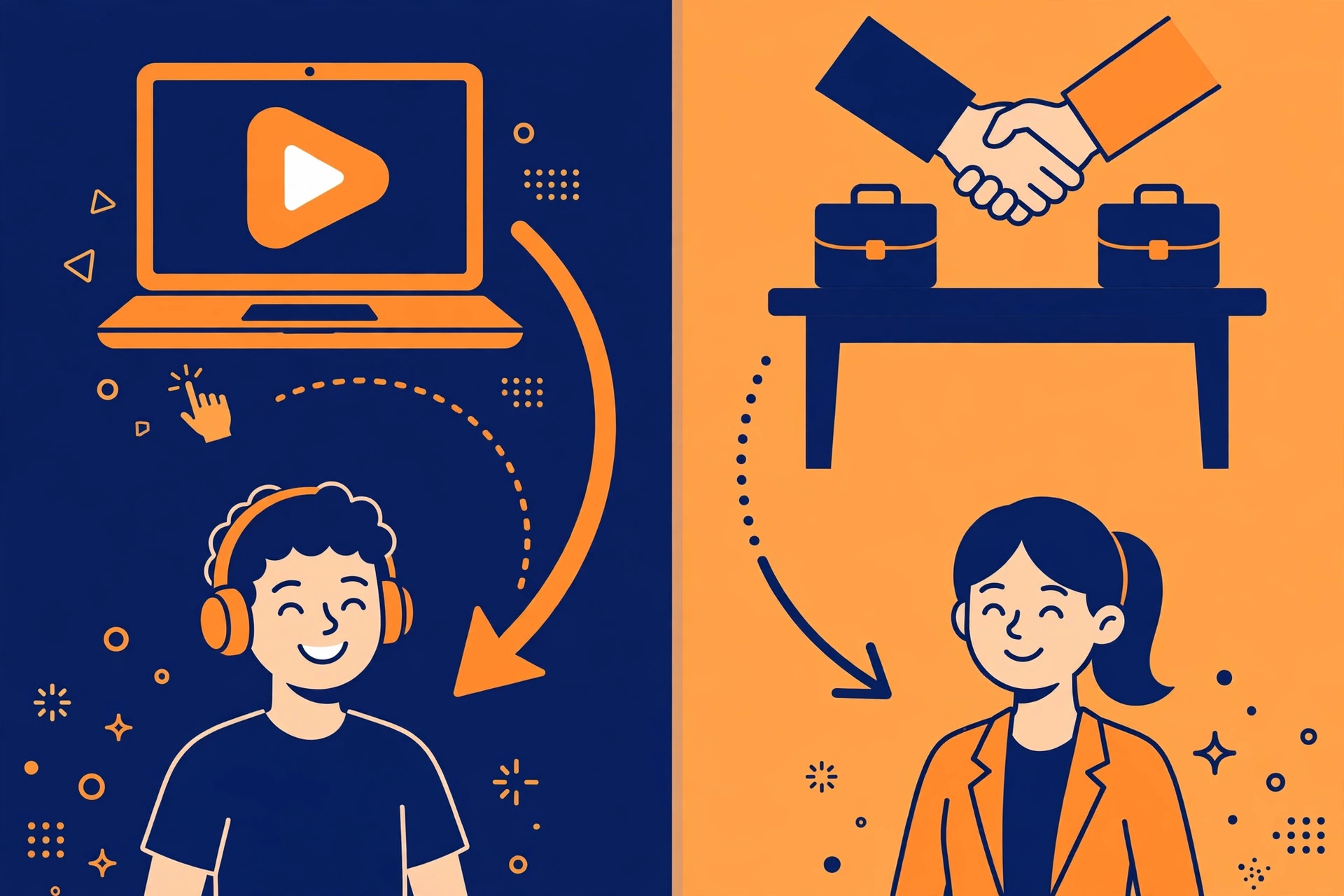
Most SaaS marketing advice fails because it skips this step. Your go-to-market (GTM) motion — how customers actually buy from you — decides which strategies will work and which are a waste of money. There are three:
Product-led growth (PLG)
The product closes the deal; marketing’s job is to drive signups and in-product adoption. Think Notion or Figma: a free tier anyone can try, upgrade prompts triggered by usage, and onboarding that teaches itself. Choose PLG if your time-to-value is short (a new user gets value in minutes, not weeks) and your price point is low enough for self-serve checkout.
SMB sales-assisted
Short sales cycles with a human touch — demos, quick calls, chat-assisted trials. Marketing feeds a pipeline of trial users and demo requests; a small sales team closes them. Choose this if your deal sizes are in the hundreds to low thousands per year and buyers need a little convincing but not a six-month evaluation.
Enterprise sales-led
Long cycles (industry reporting commonly puts enterprise SaaS sales cycles at 6–18 months), buying committees of 10+ stakeholders on larger deals, and marketing that runs on thought leadership, ABM, and sales enablement content. Choose this if your annual contract values justify a real sales team.
Be honest about which one you are. A PLG team writing enterprise whitepapers — or an enterprise team relying on self-serve signup flows — is the most common strategic mistake in SaaS marketing. Everything below assumes you’ve picked your motion; the $2,000/month plan later shows what each motion’s budget looks like.
The 5 lifecycle stages (and what to do at each)
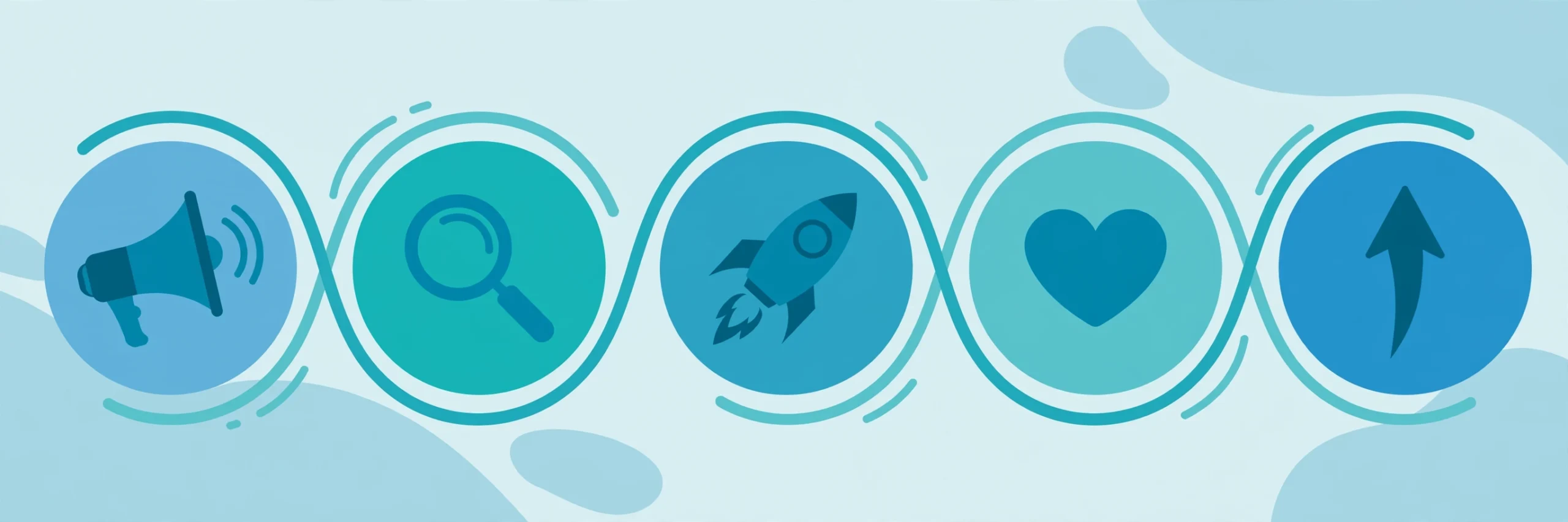
Forget the linear funnel for a moment. In practice, acquisition, activation, retention, and expansion run in parallel, not in sequence — a healthy SaaS business works all of them at once. Here’s what each stage needs:
1. Awareness — become the answer to their problem
Goal: be findable when buyers research their pain. Channels: SEO content clusters around problem-aware keywords, YouTube explainers, Reddit and community answers (AI answer engines increasingly cite these). KPI: qualified organic traffic growth.
2. Consideration — help them compare honestly
Goal: win the shortlist. Channels: comparison pages (“us vs. competitor”), ROI calculators, case studies, review profiles on G2 and Capterra. KPI: demo requests and sales-qualified leads.
3. Activation — get them to the “aha” fast
Goal: a new trial user experiences real value as quickly as possible. Channels: onboarding email sequences, in-app checklists, templates and sample data. KPI: activation rate — the share of signups reaching the key action. (Our deep dive: What Is a SaaS Marketing Funnel? 7 Stages Explained.)
4. Retention — win the renewal before it’s due
Goal: keep users engaged so renewal is a non-event. Channels: lifecycle email (feature education, usage milestones), in-app guidance, proactive check-ins at 30/60/90 days. KPI: net revenue retention — above 100% means expansion beats churn.
5. Expansion — grow inside the account
Goal: upsells, cross-sells, and seat expansion driven by usage, not sales quarters. Channels: usage-based upgrade prompts, annual-plan incentives, add-on features. KPI: expansion MRR as a share of new revenue.
15 SaaS marketing strategies that work in 2026
| # | Strategy | Goal | Apply when | Budget weight |
|---|---|---|---|---|
| 1 | Problem-led SEO content clusters | Organic awareness | You can publish consistently for 6+ months | High (time) |
| 2 | Free trial / freemium with fast activation | Acquisition + activation | Time-to-value under ~15 minutes (PLG) | Medium (product) |
| 3 | Lifecycle email (onboarding → expansion) | Activation, retention | Always — highest ROI channel in SaaS | Low |
| 4 | Comparison & alternative pages | Consideration | Competitors get branded search volume | Low |
| 5 | Customer reviews engine (G2, Capterra) | Trust + consideration | You have 20+ happy users to ask | Low |
| 6 | LinkedIn thought leadership | Awareness (B2B) | Founders/execs will post personally | Low (time) |
| 7 | Webinars & live demos | Consideration | Product benefits from showing, not telling | Medium |
| 8 | Account-based marketing (ABM) | Enterprise pipeline | High ACV justifies 1:1 effort | High |
| 9 | Co-marketing & partnerships | Awareness | You integrate with complementary tools | Low |
| 10 | Community presence (Reddit, Slack, Indie Hackers) | Awareness + trust | Always — feeds AI citations too | Low (time) |
| 11 | Referral program | Acquisition | NPS-positive user base exists | Low |
| 12 | Paid search (bottom-funnel only) | Consideration capture | Unit economics support the CPC | Medium–High |
| 13 | Integration marketplace listings | Awareness | You integrate with HubSpot, Slack, Shopify, etc. | Low |
| 14 | Free tools / calculators | Top-of-funnel links + leads | You can build one genuinely useful tool | Medium |
| 15 | Pricing experimentation | Conversion + expansion | Always — pricing is a growth lever, not a given | Low |
Budget weight = relative cost for a small team (time counts as cost). Pick 2–3 strategies and go deep; spreading a small budget across all 15 is how SaaS marketing fails.
The $2,000/month SaaS marketing plan (three variants)
This is the part most guides skip: what does a saas marketing strategy actually cost for a small, bootstrapped team? Below are three concrete monthly budgets. All assume founder time is free (it’s not, but it’s the reality) and all prices are approximate 2026 SaaS-tool rates.
Variant A: PLG motion ($2,000/month)
- $600 — content production: 4 SEO articles/month (one strong freelance writer, problem-led topics) + 1 comparison page.
- $400 — email + automation: lifecycle email tool (Customer.io / Encharge tier) for onboarding and activation sequences.
- $300 — product analytics: Mixpanel or Amplitude starter tier to instrument signup → activation → PQL events.
- $300 — review + community engine: G2/Capterra profile optimization, incentivized review pushes, founder time on Reddit/Indie Hackers.
- $400 — experiments fund: one free tool or calculator build per quarter, A/B tests on pricing and onboarding.
Variant B: SMB sales-assisted ($2,000/month)
- $700 — bottom-funnel paid search: branded + competitor terms only (never broad awareness keywords at this budget).
- $500 — content: 2 deep bottom-funnel pieces/month (comparisons, ROI calculator, case studies).
- $300 — demo infrastructure: Calendly + demo video hosting + follow-up email sequences.
- $300 — LinkedIn: founder thought-leadership (time) + light sponsored boosts on winning posts.
- $200 — CRM: HubSpot starter tier to track the trial → demo → close pipeline.
Variant C: Content-first / pre-revenue ($2,000/month)
- $800 — content velocity: 6–8 articles/month building problem-led clusters; distribution is the product until you have one.
- $400 — email list building: lead magnets, landing pages, welcome sequences (Brevo/Mailchimp free tiers stretch far here).
- $400 — community + partnerships: co-marketing with complementary tools, guest posts, podcast appearances.
- $400 — validation: 10–15 operator interviews before scaling anything; paid pilots that prove willingness to pay.
The through-line: 2–3 channels, funded properly, beat 8 channels starved of budget. Reallocate 10–20% of the budget monthly toward whatever the metrics say is winning.
SaaS marketing in 2026: what’s actually new
- Two-track discovery. Buyers research on classic search and inside AI answer engines (ChatGPT, Perplexity, Google AI Overviews). Those engines cite Reddit threads, review sites, and comparison posts — so community presence and citable, direct-answer content now feed the top of funnel indirectly.
- The messy middle moved into chat. Google’s “messy middle” — the loop where buyers explore and evaluate options — increasingly happens inside a chat window. Write definitions and direct answers that answer engines can quote.
- Bigger buying committees. Industry guides report 10+ stakeholders involved in larger B2B deals — your content must serve champions, finance, security, and end users, not one persona.
- Email still prints money. Lifecycle email remains the highest-ROI channel in the mix — onboarding, feature education, trial-to-paid nudges, and renewal sequences compound quietly while paid channels get the attention.
- PLG keeps accelerating. ProductLed’s industry reporting notes over 90% of PLG-motion companies plan to increase PLG investment — trials and freemium keep eating traditional demo-gated funnels from below.
2026 stats box (named sources)
- Global SaaS market: ~$408B (2025) → ~$465B (2026) — Zylo, via Martal’s 2026 B2B SaaS strategies guide.
- ~70% of the B2B buying journey happens before a buyer talks to sales — Martal (2026).
- Email marketing ROI ~$36 per $1 spent — Litmus, via Martal (2026).
- Webinar cost per lead ~$72 vs. $800+ for trade-show leads — Hubilo, via Martal (2026).
- ABM programs report ~171% higher average contract value — G2, via Martal (2026).
- Aligned sales + marketing teams close ~67% better — Marketo, via Martal (2026).
- Enterprise SaaS sales cycles run 6–18 months — HubSpot, via Skale’s 2026 guide.
Figures are as reported by the cited industry guides in 2026; treat them as directional, not audited.
7 SaaS marketing mistakes (and fixes)
Mistake 1: No GTM motion — tactics before strategy. Running enterprise ABM plays on a PLG product (or vice versa). Fix: pick your motion first; kill every tactic that doesn’t serve it.
Mistake 2: Eight channels, $0 depth. A $2,000 budget split eight ways buys nothing anywhere. Fix: 2–3 channels, funded properly (see the budget plans above).
Mistake 3: Gated eBooks with no follow-up. A PDF download that never triggers an activation sequence is just a vanity MQL. Fix: every lead magnet must connect to an onboarding or trial path.
Mistake 4: Ignoring expansion revenue. All budget goes to acquisition while existing accounts never grow. Fix: instrument usage milestones and trigger value-based upsells.
Mistake 5: Vanity MQLs. Celebrating lead volume while sales ignores the leads. Fix: align marketing and sales on shared pipeline goals — one definition of “qualified.”
Mistake 6: No attribution. Spending for quarters without knowing which channel drives trials. Fix: instrument signup → activation → PQL → expansion → churn as events from day one.
Mistake 7: Treating pricing as fixed. Pricing pages that haven’t changed in two years. Fix: run pricing experiments quarterly — packaging and price are growth levers. (See our guide: How to Price a SaaS Product for Early Customers.)
The metrics that matter (one table)
| Stage | Metric | Healthy range |
|---|---|---|
| Awareness | Qualified organic traffic | Steady growth in problem-aware keywords |
| Consideration | Demo / trial request rate | Growing SQL pipeline |
| Activation | Trial-to-activated rate | Depends on motion; trend matters most |
| Conversion | Trial-to-paid rate | 15–25% (self-serve) |
| Retention | Net revenue retention (NRR) | 100%+ |
| Economics | LTV:CAC ratio | 3:1 or better |
| Economics | CAC payback period | Under 12 months (SMB) |
| Advocacy | Referral-sourced signups | Measurable, growing share |
Your 30/60/90-day action plan
Days 1–30: Instrument and pick. Choose your GTM motion. Instrument the full event chain (signup → activation → PQL → expansion → churn). Pick 2–3 channels from the strategies table and kill the rest. Publish your first comparison page.
Days 31–60: Build the engine. Launch onboarding email sequences. Start the review engine (ask every happy user). Ship one lead magnet tied to a trial path. Begin founder-led LinkedIn or community presence — 3 posts/week minimum.
Days 61–90: Optimize and expand. Reallocate 10–20% of budget to the winning channel. Run your first pricing experiment. Launch the referral program. Review every metric in the table above and set next-quarter targets.
A worked example: Texas founder, $2K budget
Priya runs a 9-person invoicing SaaS in Dallas — SMB sales-assisted motion, $400 average deal. Month one, she puts $700 into bottom-funnel paid search (competitor + “alternative” terms), $500 into two comparison pages, and $300 into demo follow-up sequences. Everything else waits. By day 90, paid search drives 40% of demos at a CAC that pays back in 7 months; the comparison pages rank page two and climbing. She reallocates the experiment fund into content. No virality, no hacks — just a saas marketing strategy matched to her motion and measured weekly.
Frequently asked questions
What is SaaS marketing strategy?
A SaaS marketing strategy is the plan a subscription software company uses to attract, convert, and retain customers. It differs from traditional marketing because customers can cancel anytime — so it covers the full lifecycle (awareness through expansion), not just acquisition.
What are the best SaaS marketing channels in 2026?
For small teams: problem-led SEO, lifecycle email, comparison pages, review sites (G2/Capterra), LinkedIn thought leadership, and community presence. Pick 2–3 and fund them properly rather than spreading thin.
How much should a SaaS startup spend on marketing?
Industry guides commonly cite ~9–10% of revenue for established companies and 15–25% for early-stage SaaS. For a bootstrapped team, a focused $2,000/month plan across 2–3 channels (see the variants above) beats a scattered larger budget.
What is product-led growth marketing?
PLG is a go-to-market motion where the product itself closes the deal — free trials or freemium let users experience value before paying, and marketing focuses on driving signups plus in-product adoption and usage-triggered upgrades.
How do you measure SaaS marketing success?
Track per-stage metrics: qualified traffic, trial/demo requests, activation rate, trial-to-paid conversion (15–25% for self-serve), net revenue retention (100%+), LTV:CAC (3:1+), and CAC payback period.
Is email still effective for SaaS marketing?
Yes — lifecycle email (onboarding, feature education, trial-to-paid nudges, renewals) remains the highest-ROI channel in SaaS, commonly cited around $36 return per $1 spent. It compounds quietly while paid channels get the attention.
Key takeaways
- Pick your GTM motion (PLG, sales-assisted, or sales-led) before choosing any tactic.
- Work the 5 lifecycle stages in parallel — acquisition, activation, retention, and expansion all at once.
- Fund 2–3 channels properly; a $2,000/month focused plan beats a scattered $5,000 one.
- Write to be cited: direct answers and real numbers feed both Google and AI answer engines in 2026.
- Measure per-stage metrics weekly and reallocate 10–20% of budget monthly to winners.
How this guide was put together (methodology)
This is a strategy synthesis, not a lab test. The frameworks here (GTM motions, lifecycle stages, channel economics) were cross-checked against multiple 2026 B2B SaaS marketing guides from agencies running these playbooks daily. Statistics are attributed to their named sources throughout; treat them as directional. The $2,000/month budget plans are original — built for the bootstrapped small teams those guides rarely write for.
The bottom line
A winning saas marketing strategy in 2026 isn’t a longer list of tactics — it’s a sharper set of choices. Pick your motion, fund 2–3 channels like you mean it, instrument every stage, and let the metrics reallocate your budget monthly. Start Monday with the 30-day plan above; by day 90 you’ll know exactly which levers move your business — and that’s worth more than any 50-tactic listicle.