If you’re hunting for the best free email marketing tools for your small business in 2026, here’s the honest truth first: “free” doesn’t mean what it meant two years ago. Mailchimp quietly shrank its free plan in February 2026, and MailerLite did the same in June 2026. The good news? Several genuinely generous free plans still exist — you just need to know which limits actually matter. This guide compares 7 free email marketing tools with verified 2026 pricing, so you can pick the right one for how you send email, not how the vendor wishes you would.
Why “free” changed in 2026 (read this before you pick)
Free plans have been getting tighter across the industry as email platforms chase profitability. Two cuts matter most:
- Mailchimp (February 2026): free plan dropped from 500 contacts / 1,000 sends per month to 250 contacts and 500 sends per month. For a growing list, that’s weeks of runway, not months.
- MailerLite (June 2026): free plan dropped from 1,000 subscribers / 12,000 emails per month to 250 subscribers and 2,500 emails per month.
The takeaway isn’t that free email marketing is dead — it’s that the shape of free changed. Some tools limit contacts (how many people you store), others limit sends (how many emails go out). Picking the wrong shape for your sending pattern is the #1 mistake small businesses make. More on that below.

The one distinction that decides everything: contacts vs. sends
Almost every “which free plan is biggest?” comparison gets this wrong by ranking on a single number. In reality, free plans constrain two different things:
- Contact/subscriber caps — how many people can sit on your list. Brevo famously lets you store up to ~100,000 contacts free. Kit gives you 10,000 subscribers free.
- Send caps — how many emails you can actually dispatch. Brevo caps this at 300 emails per day; Sender allows 15,000 emails per month.
A concrete example: a bakery with 800 subscribers sending one weekly newsletter (about 3,200 emails/month) fits Sender’s free plan comfortably — 2,500 subscribers and 15,000 sends. But it would blow past Mailchimp’s free plan (250 contacts) on day one. Meanwhile a consultant with 5,000 rarely-emailed contacts sending one monthly update (5,000 sends/month) fits Brevo beautifully, but not Sender (2,500 subscriber cap).
Rule of thumb: big list + infrequent sends → Brevo or Kit. Small list + frequent sends → Sender or EmailOctopus. Tiny list + testing the waters → MailerLite or Mailchimp.

7 best free email marketing tools compared (2026 pricing)
| Tool | Free plan limits | Best for | Paid starts at |
|---|---|---|---|
| Brevo | 300 emails/day; ~100,000 contacts stored; automation included | Big lists, infrequent senders | ~$9/mo |
| Sender | 2,500 subscribers; 15,000 emails/month | Most generous all-rounder | ~$7/mo |
| Kit (ConvertKit) | 10,000 subscribers; unlimited broadcasts; 1 automation | Creators & newsletters | ~$39/mo |
| EmailOctopus | 2,500 subscribers; 10,000 emails/month | Simple newsletters on a budget | ~$10/mo |
| MailerLite | 250 subscribers; 2,500 emails/month | Beginners, clean editor | ~$12/mo |
| Mailchimp | 250 contacts; 500 emails/month | Brand familiarity, integrations | ~$13/mo |
| HubSpot | 2,000 marketing emails/month; free CRM included | Teams wanting CRM + email together | Free tools; paid seats from ~$15/mo |
Pricing checked October 2026 from vendor pricing pages and 2026 comparison guides. Vendors change free tiers often — verify the current numbers on the official pricing page before you commit.
1. Brevo — best free plan for big lists
Brevo (formerly Sendinblue) has the most unusual free plan shape — and for many small businesses, the most useful. It barely limits contacts at all (around 100,000 stored) and instead caps sending at 300 emails per day. It also includes automation on the free tier, which most competitors gate behind paid plans, plus SMS and a basic CRM.
Pick Brevo if: your list is large but you email infrequently — a monthly newsletter to 8,000 contacts is about 8,000 sends a month, well within 300/day (~9,000/month).
Watch out for: the 300/day cap is a hard ceiling. A 5,000-subscriber weekly newsletter (20,000 sends/month) won’t fit. Brevo branding appears on free emails, and only one user seat is included.
2. Sender — the most generous all-rounder
Sender’s free plan is the roomiest combined package in this list: 2,500 subscribers and 15,000 emails per month, with automation, signup forms, popups, and landing pages. For a typical small business sending weekly to a list under 2,500, it’s effectively a complete email platform at $0.
Pick Sender if: you want the longest runway before ever paying, and you send regularly.
Watch out for: fewer native integrations than Mailchimp or HubSpot, and a smaller template library. Paid plans start around $7/month when you outgrow it.
3. Kit — best free plan for creators and newsletters
Kit (formerly ConvertKit) offers something nobody else does: 10,000 subscribers free with unlimited broadcasts. The catch is scope — it’s built for creators sending newsletters, not for e-commerce automation. You get one automation sequence and Kit branding on the free tier.
Pick Kit if: you’re a blogger, coach, course creator, or newsletter writer whose business is the audience.
Watch out for: paid plans jump to ~$39/month, and the feature set is narrow for traditional service businesses or stores.
4. EmailOctopus — simple and cheap to grow with
EmailOctopus gives you 2,500 subscribers and 10,000 emails per month free, with a no-frills campaign builder. Its real strength is what happens after free: paid plans start around $10/month, among the cheapest upgrade paths here.
Pick EmailOctopus if: you want a simple newsletter tool with the lowest-cost escape hatch when you grow.
5. MailerLite — easiest to learn, tighter than it used to be
MailerLite still has the cleanest drag-and-drop editor for beginners, plus landing pages and popups on the free plan. But be clear-eyed about the June 2026 cut: 250 subscribers and 2,500 emails per month means it’s now a starter plan, not a growth plan. Paid starts around $12/month.
Pick MailerLite if: you’re brand new, non-technical, and want the gentlest learning curve for your first few hundred subscribers.
6. Mailchimp — the familiar name with the smallest free plan
Mailchimp remains the most recognized name and has the deepest integration ecosystem (Shopify, QuickBooks, and hundreds more). But after the February 2026 cut, its free plan is the stingiest on this list: 250 contacts and 500 sends a month. Paid pricing also climbs fast as your list grows — roughly $13/month to start, about $75/month at 5,000 contacts.
Pick Mailchimp if: you specifically need its integrations or your team already knows it. Don’t pick it just because it’s famous.
7. HubSpot — free email with a real CRM attached
HubSpot’s free tier includes 2,000 marketing emails per month plus its full free CRM — contacts, deal tracking, forms, and live chat. Nobody else bundles a CRM at $0. The email tool itself is simpler than Brevo’s or Mailchimp’s, but for a small team that wants contacts, pipeline, and email in one place, the bundle is unmatched.
Pick HubSpot if: you’re a B2B service business or startup that will need a CRM anyway — adopt both together from day one.
Which tool should you pick? Three scenarios
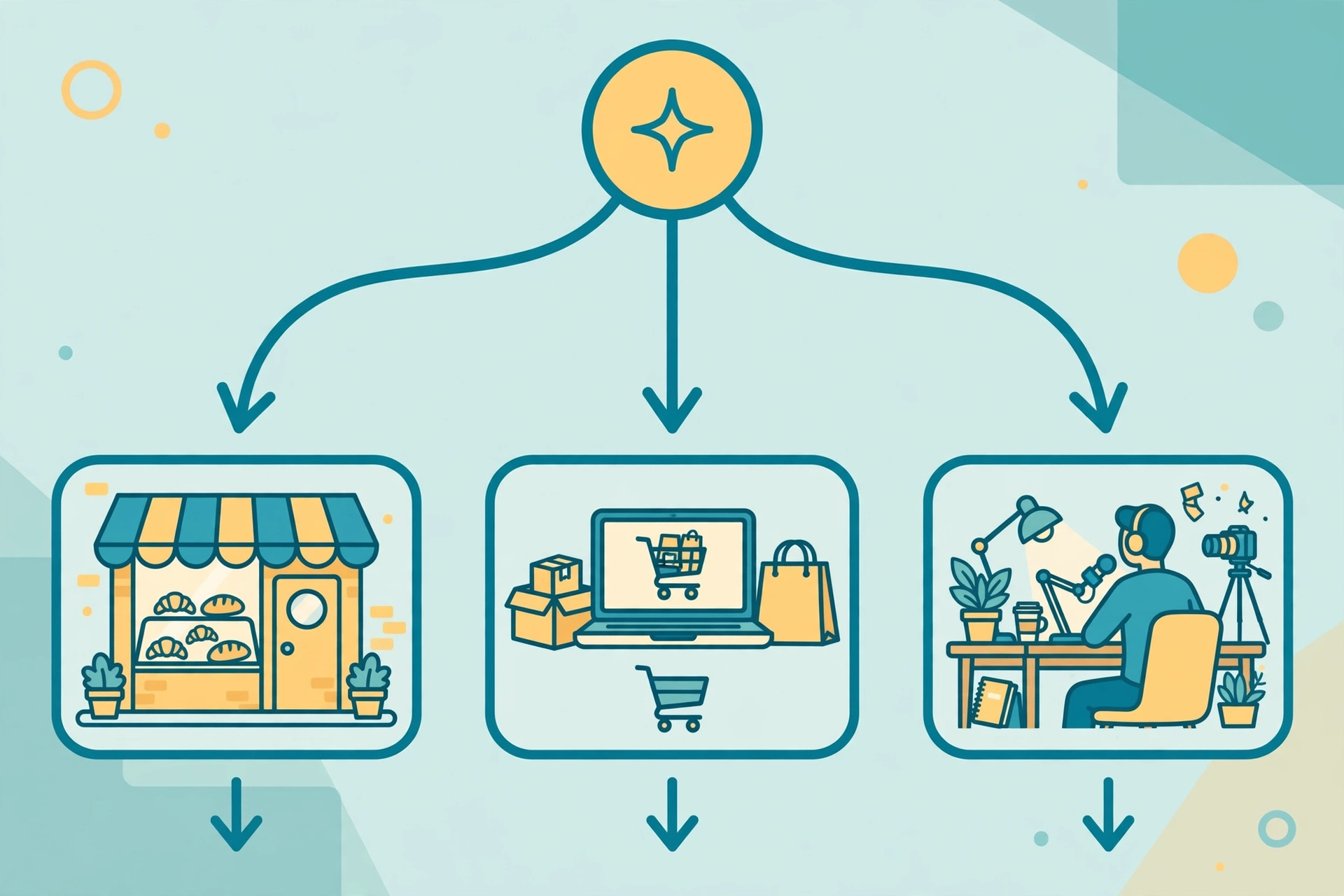
Scenario 1: Maria’s bakery in Austin, Texas. 900 subscribers, one weekly newsletter with photos of new pastries (~3,600 sends/month), non-technical owner. Best fit: Sender. 2,500 subscribers and 15,000 sends cover her with room to triple the list; the drag-and-drop editor needs no training.
Scenario 2: A Shopify side hustle selling phone cases. 400 subscribers now but growing fast, wants abandoned-cart emails. Best fit: Brevo for the automation on the free tier, or EmailOctopus if they want the cheapest upgrade path later. (Note: for serious e-commerce automation, Omnisend’s free plan — 250 contacts, 500 emails/month — is worth a look despite the small allowance, because it’s built for stores.)
Scenario 3: A freelance business coach building a newsletter. Publishing twice a week, audience-first business model. Best fit: Kit. 10,000 free subscribers with unlimited broadcasts is unbeatable for pure newsletter sending.
What free plans don’t tell you (pitfalls)
- Vendor branding. Most free plans stamp the vendor’s logo on your emails (Brevo, Sender, and others). It comes off when you pay — sometimes as a paid add-on, so check.
- Automation gates. A “free automation” label varies wildly: Brevo includes real workflows free; Kit’s free tier allows exactly one automation; Mailchimp’s free automation is minimal.
- Deliverability is on you. No free plan fixes a bad sender reputation. Verify your domain (SPF, DKIM, DMARC records), clean bounces regularly, and avoid spam-trigger phrasing in subject lines — this matters more than which tool you pick.
- Migration costs are real but manageable. Every major tool imports contacts via CSV. What you’ll rebuild: templates and automations. If you outgrow a tool, budget an afternoon for the move — and warm up the new sending domain gradually rather than blasting your full list on day one.
How to switch later without breaking your list
Start with the free plan that fits today’s list, not the list you hope to have in two years — switching is normal. When the time comes, export your contacts (CSV) and rebuild your 2–3 core templates. Recreate just the welcome sequence first. Then send to your most engaged segment for the first two weeks to build the new domain’s reputation. Most small businesses complete a migration in a weekend.
Frequently asked questions
What is the best free email marketing tool overall?
For most small businesses, Sender (2,500 subscribers, 15,000 emails/month with automation) or Brevo (300 emails/day with ~100,000 contact storage and free automation). Choose Sender for frequent sending to a smaller list, Brevo for infrequent sending to a big list.
Which free email marketing tool has the largest subscriber allowance?
Kit allows 10,000 subscribers free with unlimited broadcasts — but it’s designed for creators and newsletters, with limited automation and e-commerce features.
Is Mailchimp’s free plan still worth it in 2026?
Only for very small lists. Since the February 2026 cut (250 contacts, 500 sends/month), it’s the tightest free plan here. Its strengths now are integrations and familiarity, not generosity.
Can I use a free plan for my business, or are they just for testing?
Yes, for real business use — as long as your list size and send volume fit the limits. Thousands of small businesses run their newsletters entirely on free tiers. The honest constraint: you’ll likely need to pay once you pass a few thousand engaged subscribers.
Do free email marketing tools include automation?
Some do, some barely. Brevo includes real automation workflows free; Sender includes basic automation; Kit allows one automation; Mailchimp’s free automation is minimal. If a welcome sequence matters to you, verify this specific feature before choosing.
What happens when I outgrow the free plan?
Paid entry points are modest: roughly $7–$13/month for the first tier at most tools on this list (Kit excepted at ~$39). Export your list anytime — no tool on this list locks your contacts in.
The bottom line
The best free email marketing tools in 2026 aren’t the ones with the biggest brand names — they’re the ones whose free-plan shape matches how you actually send. Map your subscriber count against your monthly send volume, pick the tool that fits that rectangle, and don’t overthink it: every option here lets you start at $0 and migrate later. The expensive mistake isn’t picking the “wrong” free tool — it’s paying for email software before you’ve sent your first hundred campaigns. Start free, learn what your audience responds to, and upgrade when the numbers say so.
How this list was put together (methodology)
An honest note on method: this isn’t a “we clicked every button” lab test — it’s a pricing-and-limits analysis. For each tool here, I verified the current free-tier numbers against the vendor’s own pricing page and cross-checked them with multiple 2026 comparison guides. That cross-checking matters because free tiers changed twice this year alone (Mailchimp in February, MailerLite in June). Tools made the list only if the free plan is indefinite (not a 14-day trial) and genuinely usable for a real small business. That’s why trial-only tools like ActiveCampaign and Constant Contact aren’t ranked here, even though they’re excellent paid products.
Two more worth knowing (honorable mentions)
GetResponse — 500 contacts and 2,500 emails/month free, with landing pages bundled in. A solid pick if you want pages and email from one vendor; paid starts around $19/month.
Omnisend — 250 contacts and 500 emails/month free. The allowance is small, but it’s the only free tier here purpose-built for e-commerce (abandoned cart, post-purchase flows, SMS). If you run a Shopify store, test it before dismissing it on numbers alone.
Deliverability: the thing that matters more than the tool
Here’s what most “best free email marketing tools” lists skip: the tool doesn’t determine whether your emails land in inboxes — your setup does. Three non-negotiables, regardless of which platform you choose:
- Verify your domain. Add SPF, DKIM, and DMARC records for your sending domain. Every tool above walks you through this; it takes 15 minutes and it’s the single biggest deliverability lever.
- Clean your list. Remove hard bounces and people who haven’t opened in 6+ months. A smaller engaged list beats a big dead one — for inbox placement and for staying inside free-tier limits.
- Warm up gradually. Don’t blast 5,000 emails on day one from a new domain. Start with your most engaged subscribers and ramp over 2–3 weeks.
Do these three and even the simplest free tool will outperform an expensive platform with a neglected list.
Which is better for a small business: Brevo or Mailchimp?
For most small businesses in 2026, Brevo — its free plan holds far more contacts, includes automation, and paid plans scale cheaper. Choose Mailchimp only if you need a specific integration it alone offers, or your team already runs on it.
How many marketing emails can I really send for free each month?
It depends on the tool’s cap shape: Sender allows ~15,000/month, Brevo ~9,000/month (300/day), EmailOctopus 10,000/month, Kit unlimited broadcasts (to 10,000 subscribers), MailerLite 2,500/month, Mailchimp 500/month, HubSpot 2,000/month. Match the number to your actual sending rhythm.