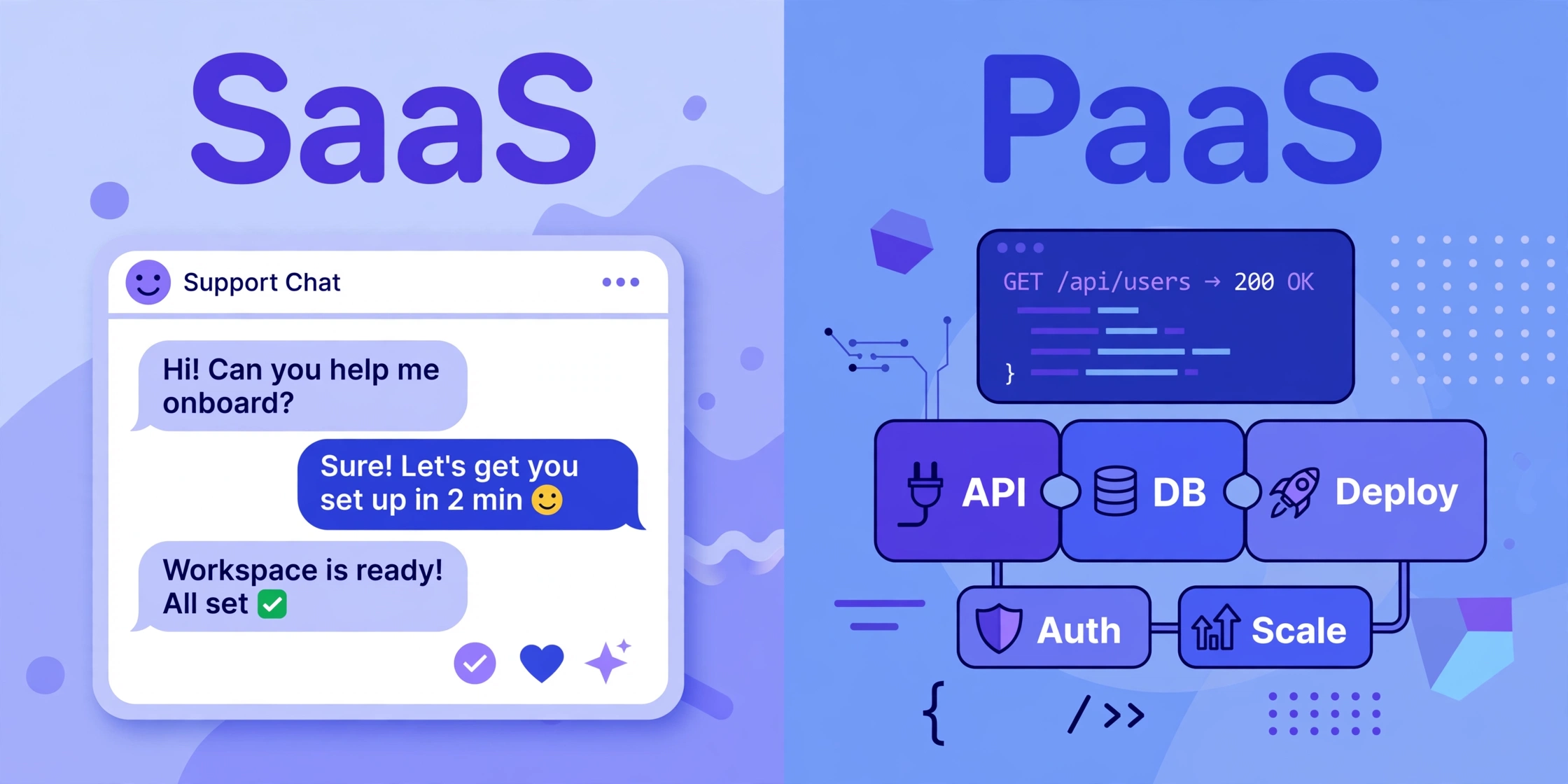
Yes — the ChatGPT you open in your browser or phone app is SaaS. You don’t install anything, you don’t manage servers, and you use finished software delivered over the internet, free or by subscription. That’s textbook software as a service.
So why does this question keep coming up? Because “ChatGPT” is really two products sharing one name. There’s the chat app everyone uses, and there’s the developer API and platform behind it — and that second one behaves a lot more like a PaaS. Once you see the two faces clearly, the confusion disappears.
Why do people think ChatGPT might be PaaS?
Fair question, because OpenAI genuinely sells to two audiences. On one side, millions of people type questions into a chat box. On the other, developers pay per token to plug OpenAI’s models into their own apps — customer-support bots, writing assistants, code helpers. When you read about startups “building on ChatGPT,” it’s easy to assume the whole thing is a platform.
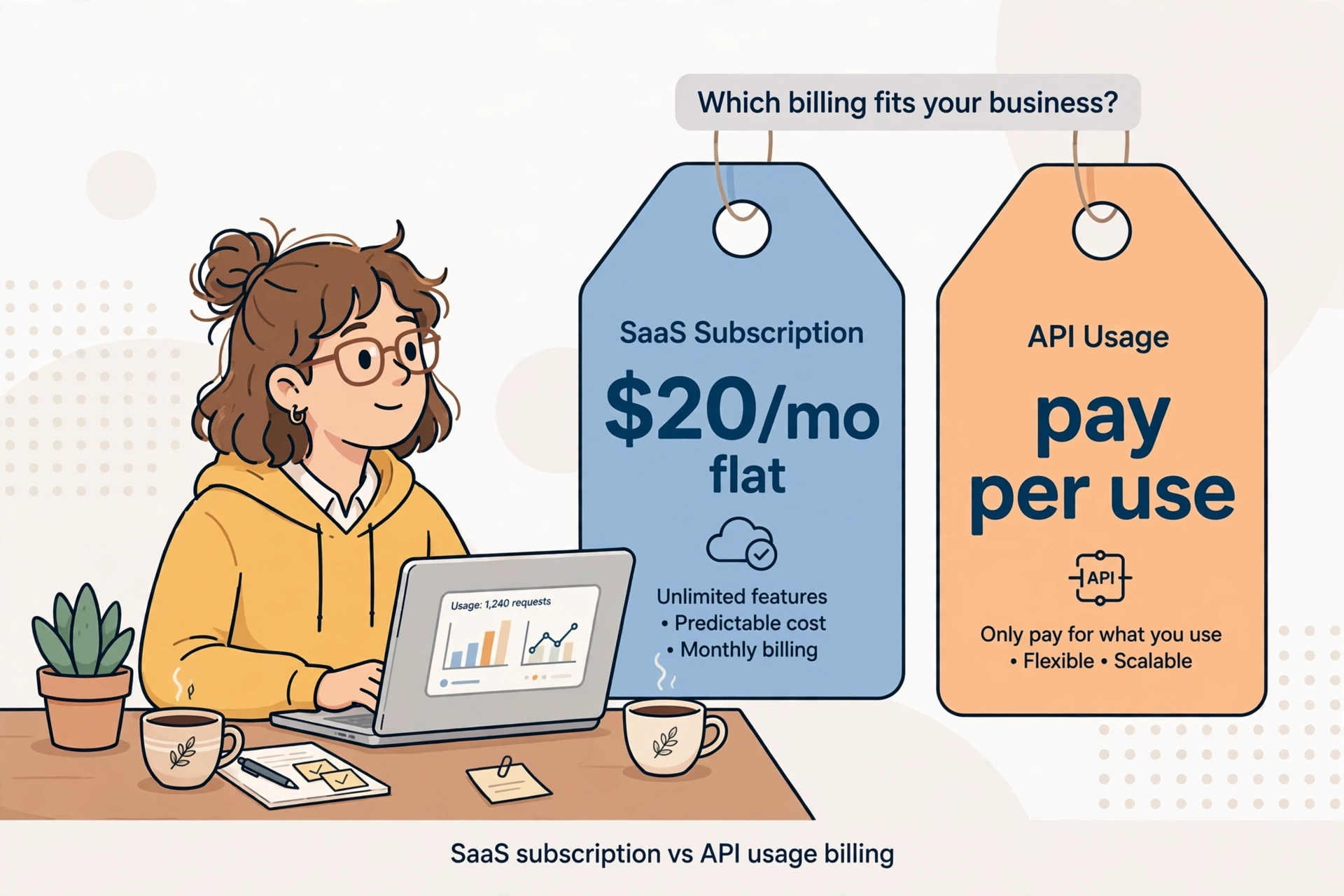
There’s also a pricing wrinkle. Classic SaaS charges a flat subscription (think $20/month for ChatGPT Plus), while the API charges by usage, per thousand tokens. That metered billing feels more like infrastructure than software, which nudges people toward the PaaS label. But billing alone doesn’t decide the category — plenty of SaaS products meter usage. The real test is what you’re buying: finished software, or a foundation to build on.
What makes something SaaS vs PaaS?
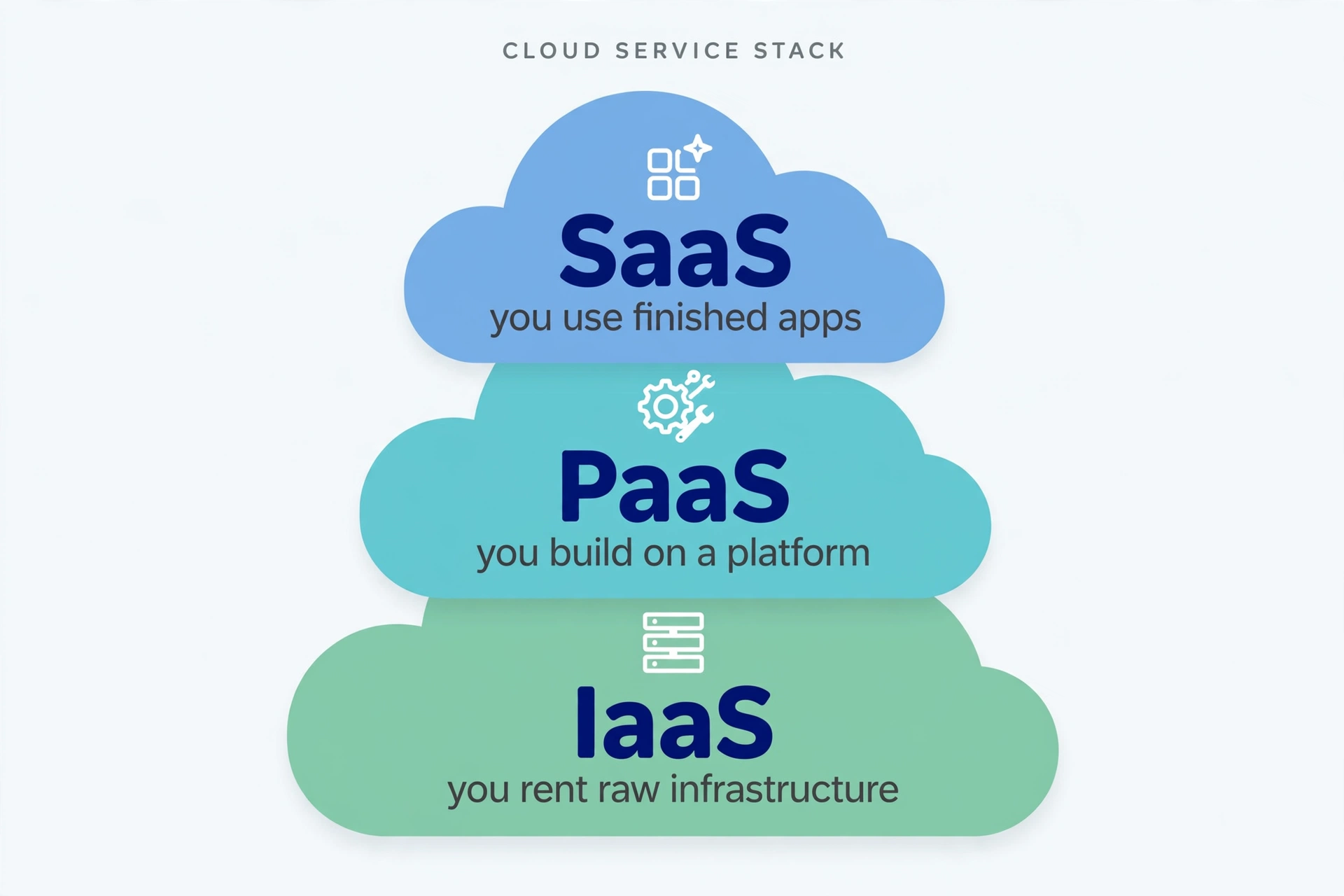
Cloud service models describe who handles what. With SaaS, the vendor handles everything — the servers, the updates, the interface — and hands you a working product. You log in and get to work. Gmail, QuickBooks Online, and Slack all fit here.
With PaaS, the vendor hands you a workbench, not a finished product: runtime environments, databases, and tools you use to build and run your own applications. Heroku, Google App Engine, and Microsoft Azure’s app services are classic examples. You bring the code; the platform handles the plumbing.
If you want the full breakdown of these cloud service models, our beginner’s guide to SaaS in cloud computing walks through each layer, and our SaaS vs PaaS vs IaaS guide compares all three side by side.
Is the ChatGPT API SaaS or PaaS?
The OpenAI API — the thing developers use through platform.openai.com — sits much closer to PaaS. It gives builders models, endpoints, fine-tuning tools, and assistants they can embed into their own products. The developer writes the application; OpenAI supplies the AI engine and the infrastructure it runs on. That’s the platform pattern: you build on top, OpenAI manages what’s underneath.
Here’s where it gets practical. Say you run a small e-commerce shop and you pay for a helpdesk tool that answers customer questions with AI. That helpdesk tool is SaaS to you — you just log in and use it. But the helpdesk company itself built its AI replies on OpenAI’s API, which functioned as a PaaS for them. Same underlying technology, different category depending on who’s buying and what they’re buying. Cloud labels describe the relationship, not the technology in isolation.
This is also why the “ChatGPT wrapper” debate misses the point. Plenty of successful AI SaaS products — writing tools, meeting notetakers, support desks — run on someone else’s models under the hood. Shopify stores run on AWS servers, and nobody argues Shopify isn’t SaaS. What makes your product SaaS is that your customer gets finished software, not a toolkit.
ChatGPT’s two faces, compared
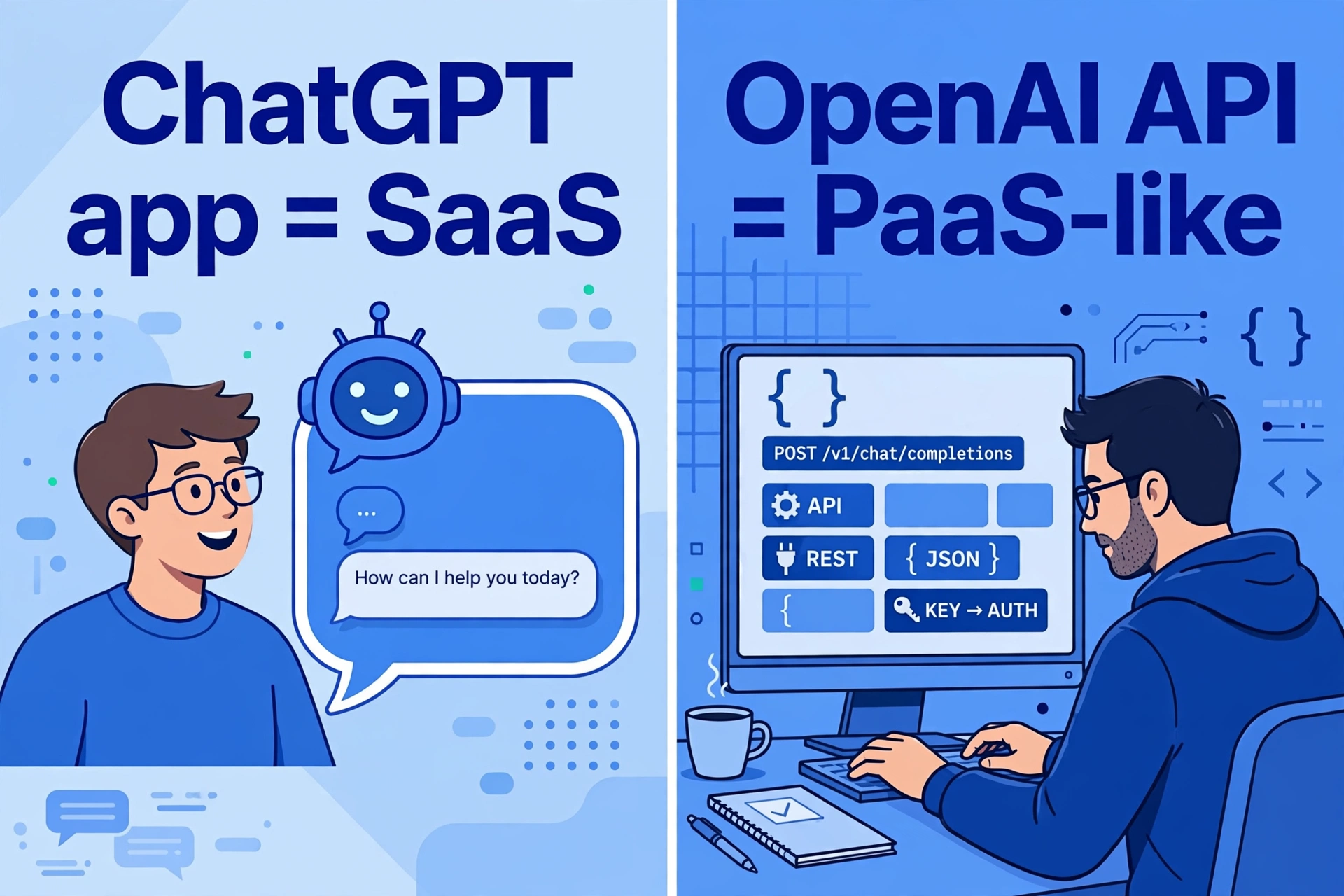
| ChatGPT (the chat app) | OpenAI API (the platform) | |
|---|---|---|
| What you get | A finished chatbot with a web and mobile interface | Models, endpoints, and tools to build your own AI features |
| Who it’s for | Anyone who wants answers, drafts, or ideas | Developers building AI into their products |
| How you pay | Free tier or flat subscription (ChatGPT Plus) | Pay-per-token, based on usage |
| What you manage | Nothing technical — just your prompts | Your application code, prompts, and product logic |
| Cloud model | SaaS | PaaS-like |
What about other AI tools (Claude, Gemini, Midjourney)?
The same two-faces rule applies across the board:
- Claude (the chat app at claude.ai) — SaaS. You open it, you chat, Anthropic handles the rest.
- Google Gemini (the app) — SaaS, same pattern.
- Midjourney — SaaS. You type prompts in Discord or on their site and get finished images. No building required.
- Anthropic’s API, Google’s Vertex AI, and Amazon Bedrock — PaaS. These hand developers the models and infrastructure to build their own AI products on.
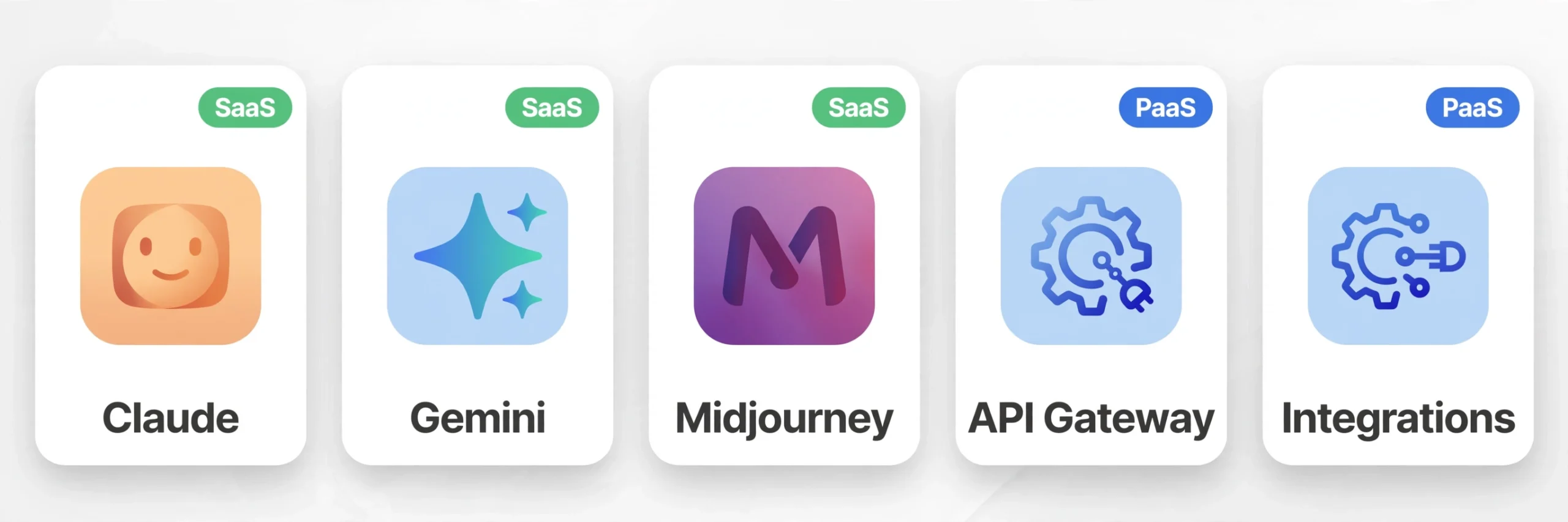
The pattern to remember: if you use it, it’s SaaS; if you build on it, it’s PaaS. Most big AI companies now sell both, which is exactly why the labels get tangled.
Why this actually matters for your business
This isn’t just trivia for cloud-certification exams. Knowing which one you’re buying changes how you budget and plan:
- Buying SaaS (like ChatGPT Plus for your team) means predictable costs — roughly $20 per user per month — and zero maintenance. Good when you want a tool, not a project.
- Building on a PaaS (like the OpenAI API) means usage-based costs that scale with your customers, plus developer time. Good when AI is part of your product, not just your workflow.
If you’re shopping for AI tools for a small team, our roundup of the best AI SaaS tools for small startups covers options where someone else already did the building — you just sign up and go.
Frequently asked questions
Is OpenAI a SaaS company?
Partly. OpenAI sells SaaS products (the ChatGPT app, ChatGPT Team and Enterprise) and platform services (the API). Most analysts still describe it as an AI company with a SaaS business model for its consumer and business apps — similar to how Amazon is a retailer that also sells cloud infrastructure.
Is ChatGPT Plus still SaaS?
Yes. Paying $20/month for Plus, Team, or Enterprise just buys you a better tier of the same SaaS product: higher limits, faster responses, and extra features. The subscription changes the plan, not the category.
What’s an example of PaaS in AI?
The OpenAI API itself, Anthropic’s API, Google Cloud’s Vertex AI, and Amazon Bedrock. Each gives developers hosted models plus the tooling to build, deploy, and scale AI features inside their own applications — the textbook PaaS arrangement.
Can one product be both SaaS and PaaS at the same time?
One company can absolutely offer both, as OpenAI does. Whether a specific offering counts as SaaS or PaaS depends on what the customer receives. The chat app is SaaS for its users; the API is a platform for its developers. The label follows the buyer, not the brand.
If I build my app on the ChatGPT API, is my app a SaaS?
Yes — for your customers, it’s SaaS. They sign up for your finished product; they never touch OpenAI directly. Your app sits one layer up the stack: PaaS underneath (OpenAI’s API), SaaS on top (your product). That’s how most modern software is layered, and it’s completely normal.
Is ChatGPT IaaS?
No. IaaS means renting raw computing resources — virtual servers, storage, networks — like AWS EC2. ChatGPT gives you neither raw servers nor a finished server to configure; it gives you finished software (SaaS) or model access (PaaS-like). The NIST definition of cloud computing lays out all three models if you want the formal wording.
The bottom line
ChatGPT the app: SaaS. OpenAI’s API: PaaS-like. The confusion exists because one company sells both, and both carry the ChatGPT name. Next time someone asks, ask them back: do you mean the app you chat with, or the API you build on? The answer follows from there.