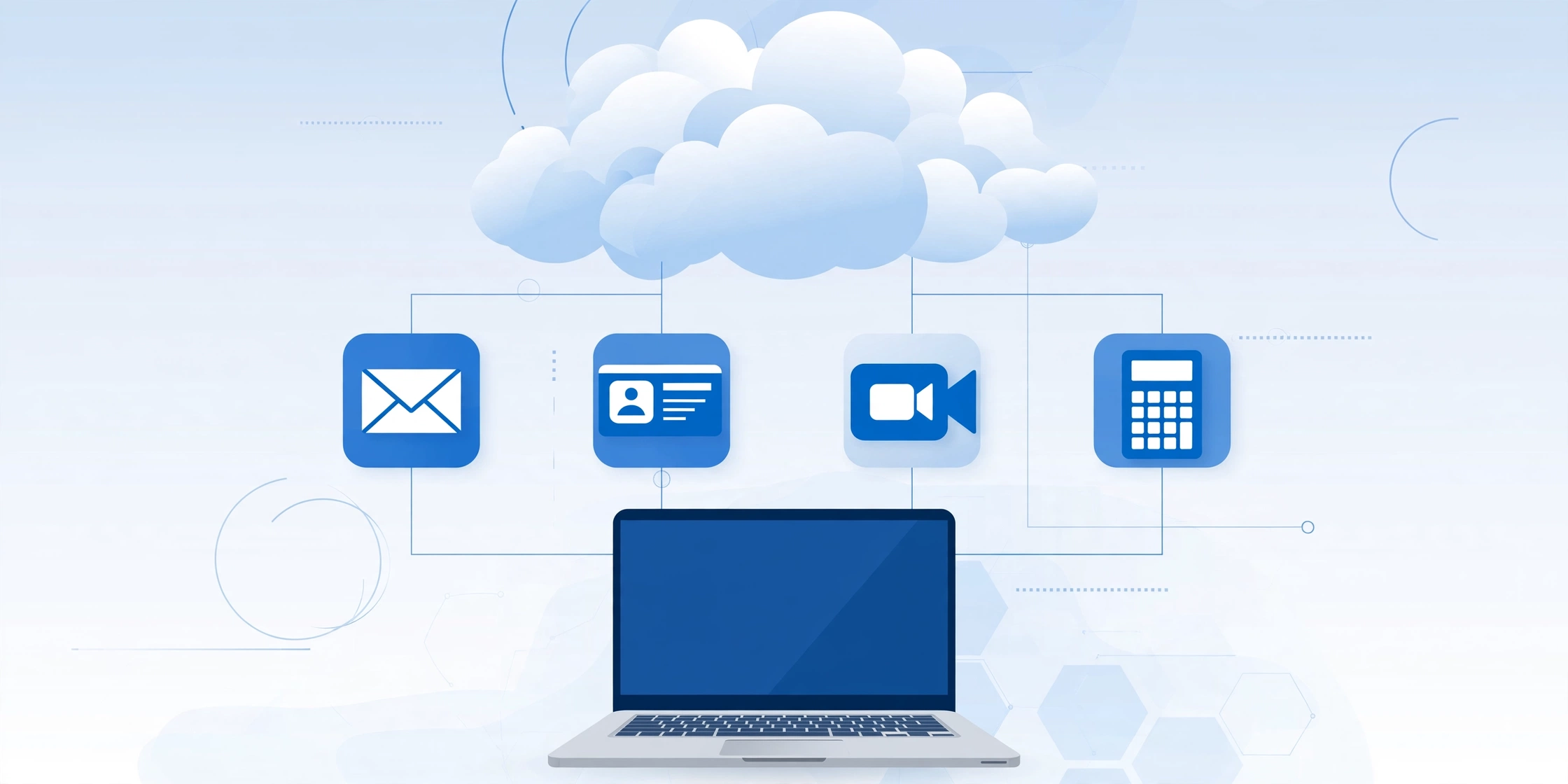
Direct answer: SaaS, PaaS, and IaaS are the three main cloud computing service models. SaaS (Software as a Service) delivers ready-to-use software over the internet (e.g., Gmail, Salesforce). PaaS (Platform as a Service) provides a platform for developers to build and deploy applications without managing infrastructure (e.g., Heroku, Google App Engine). IaaS (Infrastructure as a Service) offers virtualized computing resources — servers, storage, networks — that you control (e.g., AWS EC2, DigitalOcean). They differ in how much you manage versus how much the provider manages.
Key Takeaways
- SaaS = use software; PaaS = build software; IaaS = control infrastructure. The difference is who manages what.
- Choose SaaS for ready-made tools, PaaS for faster app development, IaaS for maximum control and customization.
- Most companies use all three: SaaS for productivity (Google Workspace), PaaS for development (Heroku), IaaS for workloads needing control (AWS).
- The shared responsibility model: with SaaS the provider manages almost everything; with IaaS you manage most things.
What Are SaaS, PaaS, and IaaS?
Cloud computing lets you rent computing power, storage, and software over the internet instead of buying and maintaining physical hardware. SaaS, PaaS, and IaaS are the three ways cloud providers package these resources — each giving you a different balance of convenience versus control.
Think of it like transportation: SaaS is taking a taxi (you just ride), PaaS is renting a car (you drive, but maintenance is handled), and IaaS is leasing a vehicle fleet (you manage everything, maximum flexibility).
SaaS — Software as a Service
SaaS delivers complete, ready-to-use software applications over the internet. You don’t install, maintain, or update anything — you simply log in through a browser and use it.
Examples: Gmail, Salesforce, Slack, Dropbox, Zoom, HubSpot, Shopify.
Who manages what: The provider handles everything — infrastructure, platform, software, updates, security patches. You just configure your settings and use the application.
Best for: End users and businesses that need software tools without IT overhead. If you want email, CRM, or collaboration tools that “just work,” SaaS is the answer.
Advantages: Zero setup, automatic updates, accessible from anywhere, predictable subscription pricing, no IT staff required.
Limitations: Least customizable — you get what the vendor offers. Data lives on the provider’s servers (consider compliance). Switching vendors can be painful if you’re deeply integrated.
For a deeper dive, read our complete guide to SaaS software. And if you’re wondering specifically what SaaS in cloud computing means, our beginner’s guide breaks it down in plain English with real-world examples.
PaaS — Platform as a Service
PaaS provides a complete development and deployment environment in the cloud. Developers get the platform — runtime, databases, development tools, operating systems — without managing the underlying servers, storage, or networking.
Examples: Heroku, Google App Engine, Microsoft Azure App Service, AWS Elastic Beanstalk, Render, Railway.
Who manages what: The provider manages infrastructure, operating systems, and runtime environments. You manage your application code and data.
Best for: Developers and teams who want to build and ship applications fast without DevOps overhead. Startups launching MVPs love PaaS because it eliminates infrastructure management.
Advantages: Faster development cycles, no server management, built-in scaling, lower DevOps costs, focus on code not infrastructure.
Limitations: Less control than IaaS — you’re constrained by the platform’s supported languages and configurations. Can get expensive at scale. Vendor lock-in risk if you use proprietary platform services.
IaaS — Infrastructure as a Service
IaaS provides virtualized computing infrastructure — virtual machines, storage, networks, firewalls — that you provision and manage over the internet. It’s the closest to owning physical hardware, without the hardware.
Examples: Amazon EC2, Google Compute Engine, Microsoft Azure VMs, DigitalOcean Droplets, Linode.
Who manages what: The provider manages the physical hardware and virtualization. You manage everything else: operating systems, middleware, runtimes, applications, and data.
Best for: IT teams and companies that need full control — custom architectures, specific compliance requirements, high-performance workloads, or lift-and-shift migrations from on-premises data centers.
Advantages: Maximum flexibility and control, no vendor lock-in on the application layer, cost-effective for variable workloads (scale up/down on demand), global data center choice.
Limitations: Requires DevOps expertise. You’re responsible for OS patches, security configuration, and application management. Misconfigured resources can lead to surprise bills.
SaaS vs PaaS vs IaaS: Side-by-Side Comparison
| Aspect | SaaS | PaaS | IaaS |
|---|---|---|---|
| What you get | Finished software | Development platform | Virtual infrastructure |
| You manage | Just your data & settings | Your code & data | OS, apps, data, runtime |
| Provider manages | Everything else | Infrastructure & platform | Physical hardware only |
| Technical skill needed | None | Development skills | DevOps/sysadmin skills |
| Customization | Low | Medium | High |
| Typical users | End users, businesses | Developers, startups | IT teams, enterprises |
| Examples | Gmail, Salesforce, Slack | Heroku, App Engine | AWS EC2, DigitalOcean |
When to Use Each: A Decision Framework
- Choose SaaS when: You need a tool that works now — email, CRM, accounting, collaboration. Don’t build what you can buy.
- Choose PaaS when: You’re building a custom application and want to focus on code, not servers. Ideal for MVPs, web apps, and APIs.
- Choose IaaS when: You need full control over the environment — custom OS configurations, specific compliance needs, complex architectures, or migrating existing servers to the cloud.
In practice, most companies use all three simultaneously. A typical startup might use Google Workspace (SaaS) for productivity, Heroku (PaaS) for their app, and AWS S3 (IaaS) for file storage.
Real-World Examples: How Companies Combine Them
A SaaS startup: Uses Slack and Notion (SaaS) for team collaboration, deploys their product on Render (PaaS), and stores backups on AWS S3 (IaaS).
An enterprise: Runs Salesforce (SaaS) for CRM, builds internal tools on Azure App Service (PaaS), and hosts legacy applications on Azure VMs (IaaS) during cloud migration.
A developer side project: Uses GitHub (SaaS) for code, deploys to Railway (PaaS) for simplicity, or to a DigitalOcean droplet (IaaS) for learning server management.
FAQ — People Also Ask
Is AWS SaaS, PaaS, or IaaS?
AWS offers all three. EC2 (virtual servers) is IaaS, Elastic Beanstalk (app deployment platform) is PaaS, and services like WorkMail or Connect (ready-to-use applications) are SaaS. Most major clouds (AWS, Azure, Google Cloud) span all three models.
What is the difference between PaaS and IaaS?
With PaaS, the provider manages the operating system, runtime, and middleware — you just deploy code. With IaaS, you get raw virtual machines and manage the OS and everything above it yourself. PaaS is simpler; IaaS gives more control.
Is Google Drive SaaS or PaaS?
Google Drive is SaaS — it’s a finished application you use directly. Google App Engine (for deploying code) is PaaS. Google Compute Engine (virtual machines) is IaaS.
Which is more secure: SaaS, PaaS, or IaaS?
Security is a shared responsibility in all three, but the split differs. With SaaS, the provider handles most security. With IaaS, you handle most of it. No model is inherently “more secure” — it depends on whether you or the provider is better equipped to manage each layer.
Can a company use SaaS, PaaS, and IaaS together?
Absolutely — and most do. Use SaaS for standard business tools, PaaS for building custom applications quickly, and IaaS where you need infrastructure control. The models complement rather than compete with each other.
Conclusion
SaaS, PaaS, and IaaS aren’t competing choices — they’re different tools for different jobs. Use SaaS when you want software that just works, PaaS when you’re building applications and want to skip infrastructure management, and IaaS when you need full control over your computing environment.
Understanding these models helps you make smarter technology decisions, whether you’re choosing tools for your business or architecting your own SaaS product. For more, explore our SaaS software guide and our SaaS 101 startup guide.