Will CRM Be Replaced by AI? The Honest 2026 Answer
Will CRM be replaced by AI? The honest answer is no — but the CRM you know is already on its way out. Your customer database isn’t going anywhere. The hours your team spends typing into it? Those are numbered.
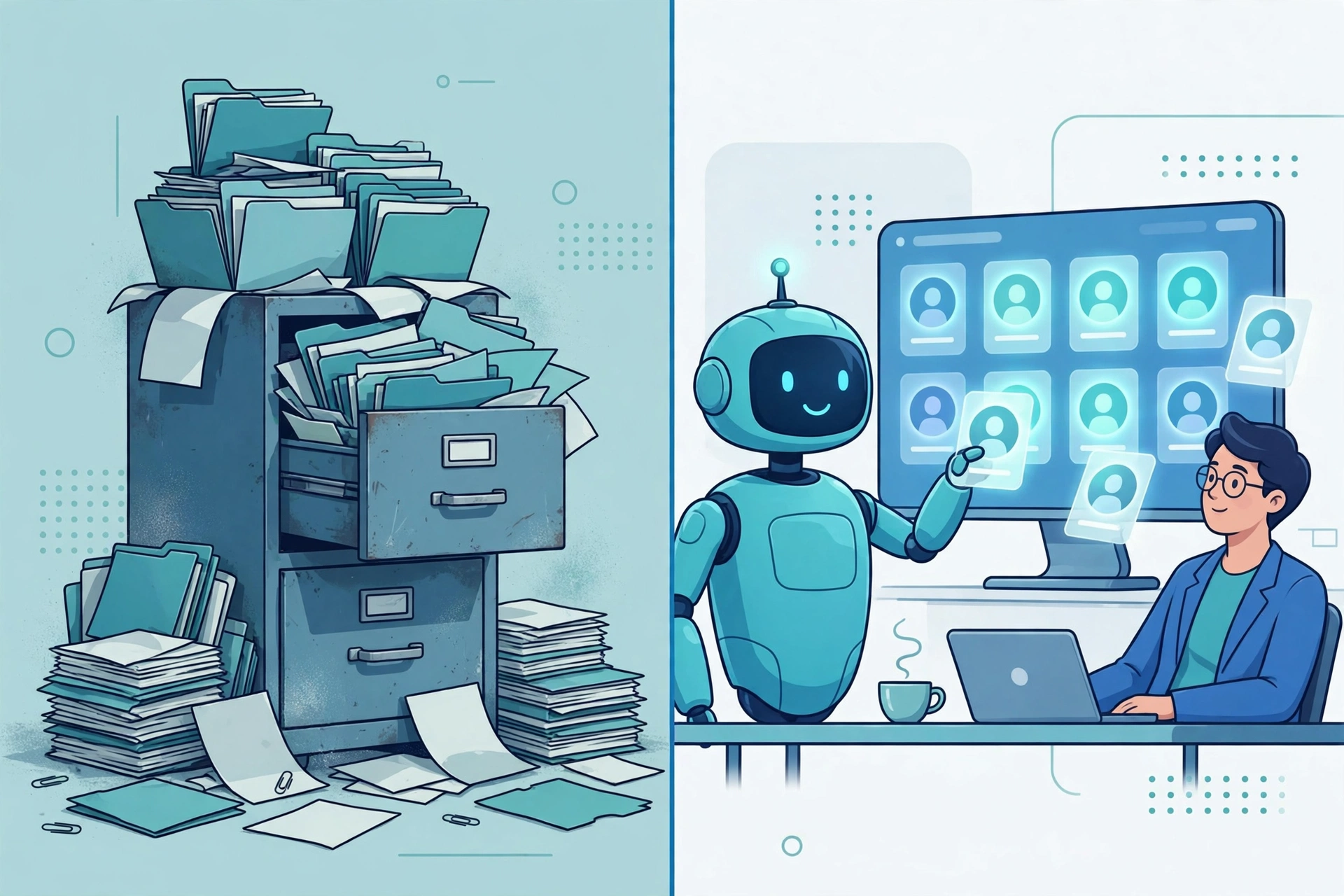
Here’s what actually happened: CRMs became digital filing cabinets. Salespeople hate updating them, managers don’t trust the data inside them, and small businesses pay for seats nobody fully uses. AI is now attacking exactly that problem — not by deleting your CRM, but by changing what a CRM is: from a place where you enter data to a system that understands your business.
In this post, I’ll show you two companies already living in that future, what AI can and can’t do inside a CRM today, the risks nobody mentions, what it actually costs, and a practical 2026 roadmap if you run a small business. No hype, no vendor pitch — just what I’d tell a friend.
Will CRM Be Replaced by AI Completely? Here’s the Short Answer
Short version: your CRM won’t disappear. It’ll become unrecognizable.
Think about what a CRM actually does today. It stores contacts, tracks deals, logs calls, and reminds you to follow up. AI can now handle the middle of that list better than most humans — transcribing calls, scoring leads, drafting follow-ups. But it still needs a single source of truth to work from. That source of truth is the CRM.
The shift people are really describing has a name: CRM is moving from a system of record to a system of intelligence. The record stays. The intelligence layer on top is what’s new — and it’s arriving fast.
The top-ranking 2026 coverage of this exact question landed in the same place: no replacement, but a CRM you wouldn’t recognize. It also flagged something important — years of sloppy manual data entry have left most CRMs full of junk, and AI trained on junk gives you junk back. That “data-entry debt” is the real obstacle, not the technology itself.
Say you run a 14-person HVAC company outside Dallas. Your techs hate logging jobs in the CRM, your office manager spends Friday afternoons cleaning up duplicate contacts, and follow-up emails go out late — or never. Nobody in that business is asking whether AI will “replace” the CRM. They’re asking whether someone can finally make the thing useful. That’s the real question, and the answer is yes.
What “Replaced” Actually Means in 2026
When people ask will CRM be replaced by AI, they usually picture their CRM vanishing — logins deleted, dashboards gone. That’s not what’s happening.
What’s actually being replaced is the old job description of the CRM. Three things are changing:
- Data entry is dying. AI now transcribes sales calls, pulls details from emails, and updates records on its own. The CRM stops being a chore.
- Insights are becoming proactive. Instead of you building reports, the CRM tells you which deals are stalling and why.
- The interface is going conversational. One analyst described the future CRM as a “BI layer you talk to” — you ask “which opportunities need attention today?” and get an answer, not a dashboard you have to decode.
So the CRM survives, but the filing cabinet dies. What replaces it looks closer to an assistant that happens to live where your customer data lives.
Two Companies Already Proving the Point
This isn’t theory. In October 2026, Business Quarter reported that the IT services firm Mastek replaced its internal legacy CRM with a platform it built itself — AI-native from the ground up. The company’s stated goal: lift win probability by 10%. Note the wording carefully — that’s the goal they announced, not a measured result. Still, a company doesn’t rip out its own CRM on a whim. When people who sell software for a living decide their own CRM needs rebuilding around AI, that’s a signal worth taking seriously.
Then there’s Zero, a Finnish startup that raised $10.3 million in seed funding in September 2026, as reported by BeBeez — explicitly to replace the traditional CRM with AI agents. Investors don’t hand over eight figures for a pitch deck unless they believe the old model is vulnerable. Zero’s bet: AI agents can handle enough of the CRM’s job — capturing interactions, prioritizing follow-ups, surfacing insights — that the traditional interface becomes optional.
Two very different companies, same conclusion: the traditional CRM, as a thing humans manually operate, is living on borrowed time. The customer data underneath it isn’t going anywhere.
How AI Is Already Changing Your CRM
You don’t have to wait for the future. The big platforms already ship AI inside the CRM you might be using today:
- Salesforce bakes AI into its platform through Einstein and Agentforce — lead scoring, deal predictions, and AI agents that can take actions inside the CRM.
- HubSpot offers Breeze AI, which drafts emails, summarizes calls, and enriches contact records automatically.
- Zoho has Zia, an AI assistant that predicts deal outcomes and flags anomalies in your pipeline.
The pattern is the same everywhere: the CRM watches what happens — calls, emails, meetings — and does the paperwork itself. That’s AI lead scoring deciding which prospects deserve a call today. That’s sales forecasting with AI replacing the spreadsheet your sales manager updates every Monday. That’s customer data management happening in the background instead of eating your Friday afternoon.
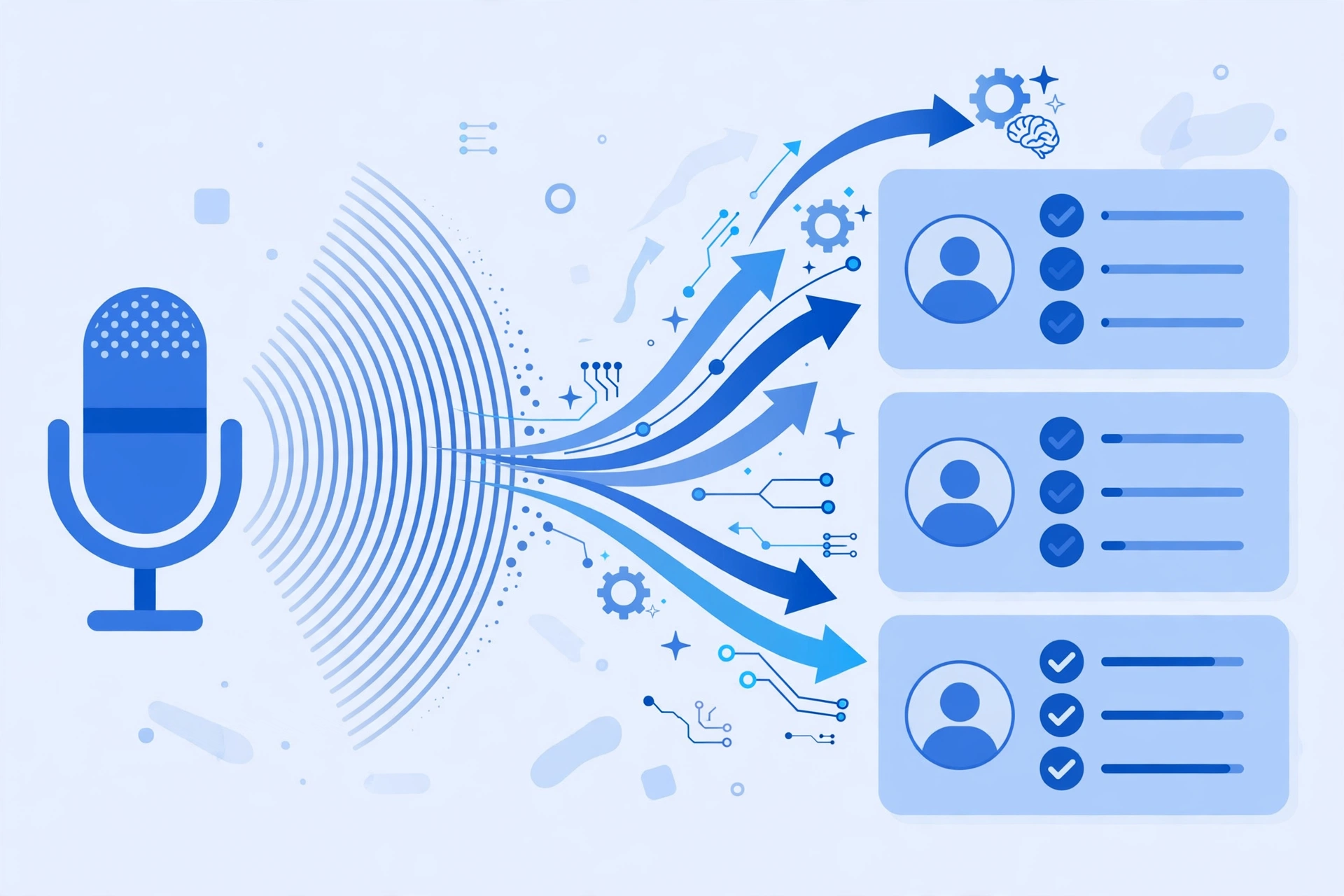
And the interface shift is real. Instead of clicking through five screens to build a pipeline report, managers increasingly just ask. “Which deals slipped this week?” “Who hasn’t been contacted in 30 days?” The CRM answers in plain language. That’s the conversational BI layer analysts keep describing — and it’s already inside products you can buy.
Does that mean you should rush to turn every AI feature on? No. It means the question “will AI replace CRM software” is already being answered in slow motion, feature by feature, inside the tools you own.
What AI Can Automate vs What Still Needs You
Let’s get concrete. Here’s where AI genuinely helps inside a CRM today — and where it doesn’t.
Hand it to AI:
- Transcribing and summarizing sales calls and meetings
- Logging emails, calls, and touchpoints automatically
- Scoring and ranking leads by likelihood to close
- Drafting follow-up emails for a human to approve
- Flagging stalled deals and at-risk accounts
- Cleaning duplicates and filling in missing contact details
Keep it human:
- Building actual relationships — trust doesn’t come from an algorithm
- Negotiating price and terms on big deals
- Reading the room on a difficult renewal call
- Making judgment calls when the data is ambiguous
- Owning the strategy: which markets to chase, which to drop
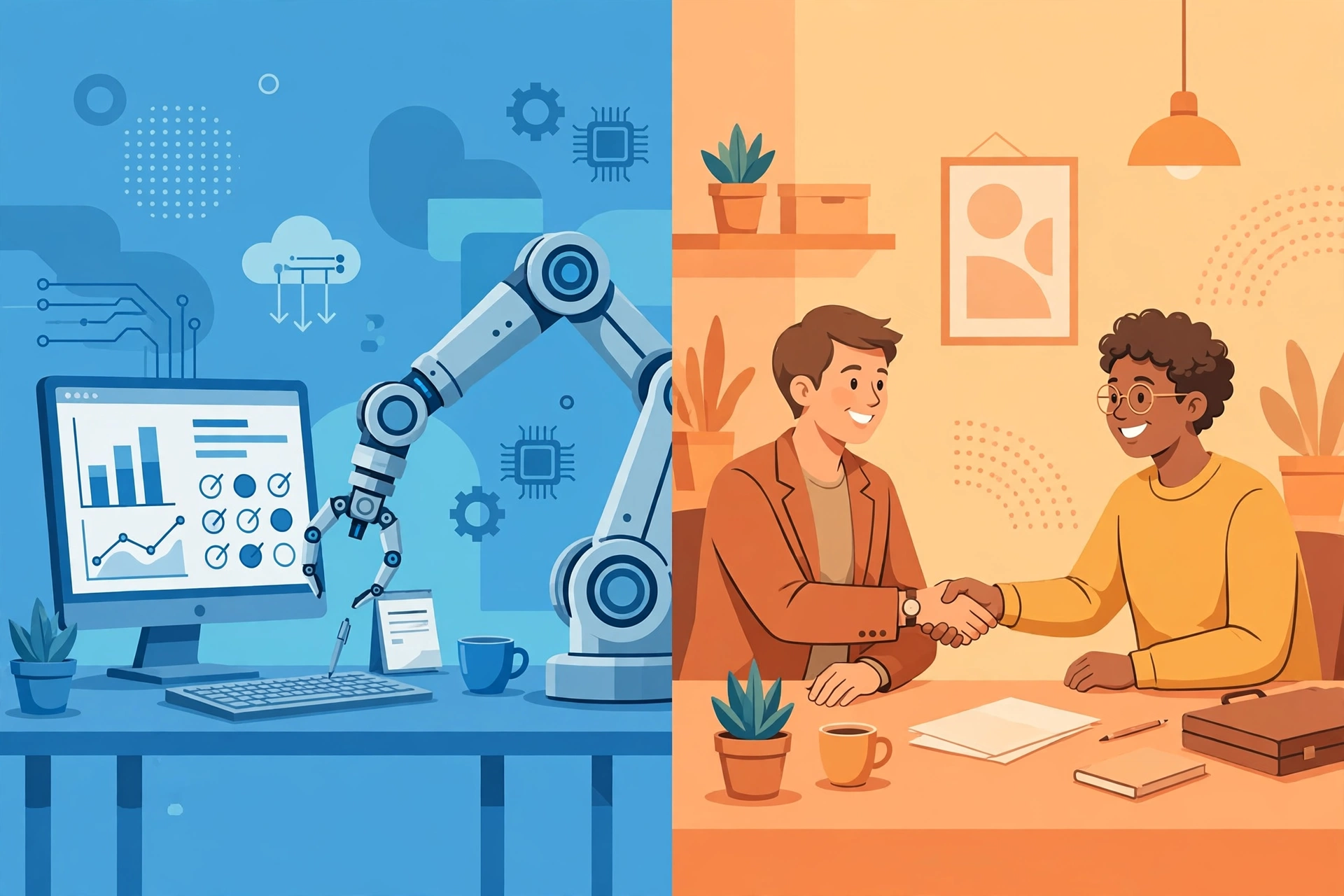
Notice the split. AI takes the repetitive, data-heavy work. Humans keep the work that involves trust, judgment, and reading people. That division of labor is the real story behind “can AI replace CRM systems” — it replaces the busywork inside the CRM, not the relationships the CRM exists to support.
AI CRM vs Traditional CRM: Side by Side
If you’re comparing what you have against what’s coming, this table sums it up:
| Traditional CRM | AI-powered CRM | |
|---|---|---|
| Data entry | Manual — reps type everything | Automatic — captured from calls, emails, meetings |
| Lead prioritization | Gut feel or static rules | AI lead scoring based on behavior patterns |
| Reporting | You build dashboards | You ask questions, it answers |
| Follow-ups | Manual reminders, often late | Drafted automatically, approved by humans |
| Forecasting | Spreadsheet guesswork | Predictive analytics on live pipeline data |
| Biggest weakness | Garbage in, garbage out — and lots of garbage in | Needs clean data and human oversight to stay trustworthy |
Look at that last row. Both sides have the same Achilles’ heel: data quality. An AI-powered CRM doesn’t fix a messy database by magic — it just makes the mess visible faster. Which brings us to the part vendors skip.
The Risks Nobody Talks About
Every vendor demo shows the magic. Almost none show what happens when it goes wrong. If you’re a small business owner trusting AI with customer relationships, you should know these four risks upfront.
1. Hallucinations without ground truth. AI models sometimes invent details — a wrong phone number, a meeting that never happened, a “fact” about a customer pulled from thin air. Inside a CRM, that isn’t a funny chatbot quirk. It’s your rep calling a prospect and quoting something false. The fix: never let AI write directly to customer-facing records without a human approving it, at least in the beginning.
2. Data privacy and compliance. Your CRM holds the most sensitive data your business owns — customer names, deal values, sometimes payment details. Feeding that into AI features means understanding where the data goes, who can see it, and what the vendor does with it. If you handle EU customers, GDPR still applies in full, AI or no AI. Ask your vendor for their data-processing terms in writing. If they can’t produce them, that’s your answer.
3. The EU AI Act transparency rules. Industry trend reports for 2027–2028 note that EU AI Act transparency requirements for customer-facing AI apply from August 2026. In plain English: if an AI system is interacting with your customers — chatbots, automated outreach, AI-drafted messages — you may need to disclose that it’s AI. If you sell into Europe, check this before you automate a single customer touchpoint.
4. Over-automation kills trust. This is the quiet one. A prospect can feel the difference between a thoughtful follow-up and an automated sequence wearing a human costume. Automate the research and the drafting — but let a person press send on anything that matters. One tone-deaf automated message can undo months of relationship building.
None of these are reasons to avoid AI in your CRM. They’re reasons to stay in charge of it.
What AI CRM Features Actually Cost
Let’s talk money, honestly. I won’t quote you specific prices here, because AI pricing changes fast and any number I print today could be wrong next quarter.
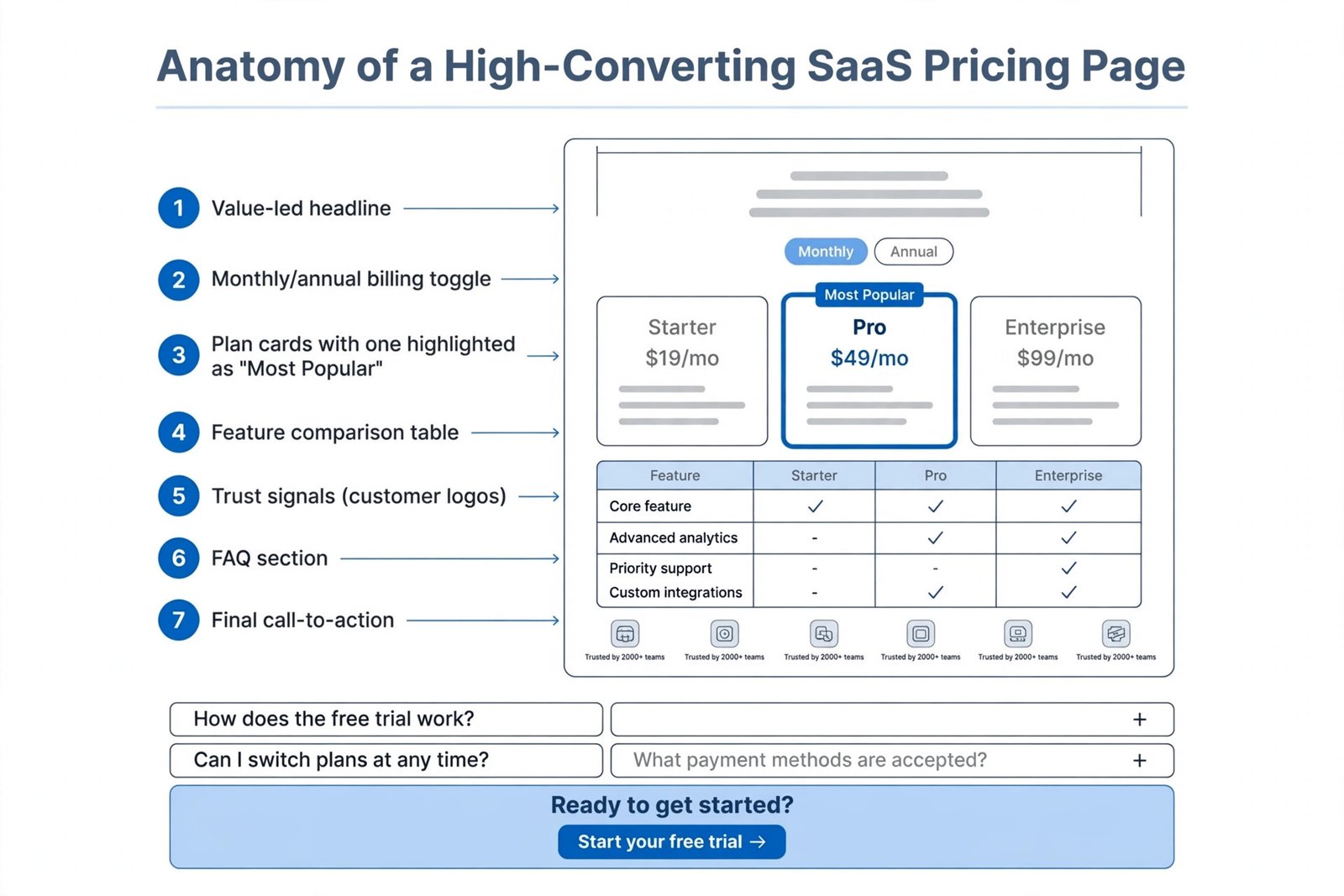
Here’s the pattern instead: AI capabilities almost always sit on top of existing CRM pricing tiers. You buy the CRM plan first, then AI features come as higher-tier inclusions or paid add-ons. So the real question isn’t “what does AI CRM cost” — it’s “what tier do I need to be on to get the AI features, and are they worth the jump from where I am now?” For a sense of how SaaS companies design those tiers, our breakdown of SaaS pricing page examples that convert is worth a look.
Before you pay anything, check the current pricing pages of the vendors you’re considering — Salesforce, HubSpot, Zoho, Pipedrive, Microsoft Dynamics 365 — and compare which AI features each tier actually includes. Demos are free; pricing pages don’t lie the way sales calls sometimes do.
And budget for the hidden cost: data cleanup. Remember the data-entry debt from earlier? AI features perform badly on messy databases. Most small businesses need a cleanup project — deduplicating contacts, archiving dead leads, standardizing fields — before AI is worth turning on. That costs time, not software, but it’s the step everyone skips and then blames the AI for.
Your 2026 Roadmap: A Small Business Playbook
Enough theory. If you run a small business and want to be ready — without betting the company — here’s a concrete plan for the rest of 2026:
Step 1: Audit your CRM data this quarter. Export your contacts. Kill the duplicates, archive the dead leads, fix the obviously wrong fields. You can’t automate on top of garbage. This one step does more for your “AI readiness” than any software purchase.
Step 2: Turn on one micro-automation. Don’t boil the ocean. Pick one: AI call summaries, automatic email logging, or lead scoring. Run it for a month. Measure one thing — hours saved, or follow-ups sent on time. If it works, add a second.
Step 3: Automate one full workflow. A good candidate: new lead comes in → AI researches the company → drafts a personalized first email → you approve and send. You stay in the loop, but the 20 minutes of research disappears.
Step 4: Train your team in 30-minute sessions. Not a three-day course. One short session per feature, with real examples from your own pipeline. The teams that fail at AI CRM aren’t the ones with bad software — they’re the ones where nobody learned the new workflow.
Step 5: Review quarterly. Every three months, ask: what’s actually saving time, and what’s shelfware? Kill the shelfware. AI features you don’t use are just a more expensive CRM.
That’s it. No rip-and-replace, no six-figure consulting project. Just steady progress while the big vendors figure out the grand vision.
What Will CRM Look Like in 2030?
So will CRM be replaced by AI by 2030? Here’s my best read of where this goes:
The CRM of 2030 probably won’t have the interface you picture today. Industry trend watchers point to agentic CRM — AI agents that don’t just answer questions but do multi-step work: researching a prospect, drafting the proposal, scheduling the follow-up, updating the forecast, all as one chain. You supervise; the agents execute.

The dashboard won’t die entirely, but it’ll stop being the main way you interact with customer data. Conversational interfaces — asking “what changed with our top 10 accounts this week?” — become the default. The CRM fades into the background and becomes infrastructure, like email hosting: essential, invisible, and judged on reliability rather than features.
One honest caveat: predictions about 2030 are guesses, mine included. The safe bet isn’t on a specific interface — it’s on the trend. Less typing, more asking. Less managing software, more managing relationships. Every roadmap decision you make in 2026 should point that direction.
My Take
In my view, the whole “will CRM be replaced by AI” debate asks the wrong question. The right question is: why did we ever accept a CRM that needed humans to act like data-entry clerks?
AI isn’t killing the CRM. It’s killing the worst part of the CRM — the part everyone hated. What’s left is actually worth paying for: a system that knows your customers and helps you serve them better. I’ve watched small businesses drown in CRM busywork for years. If AI gives those hours back, that’s not a threat. That’s the software finally doing its job.
My advice hasn’t changed since the first paragraph: keep your CRM, clean your data, automate one thing at a time, and stay in charge. The businesses that win won’t be the ones with the fanciest AI. They’ll be the ones whose customer data was worth building AI on top of.
Frequently Asked Questions
Will CRM be replaced by AI?
No — but the traditional CRM is being transformed beyond recognition. AI is replacing manual data entry, static reports, and dashboard-diving inside the CRM, while the customer database underneath becomes more important than ever. Expect evolution, not extinction.
Can AI work without a CRM?
Technically yes, practically no. AI needs a single source of truth about your customers to be useful — that’s what the CRM provides. AI without a CRM is a smart assistant with amnesia: impressive in a demo, unreliable with real customers.
Is CRM still relevant in 2026?
Yes. If anything, AI makes the CRM more relevant, because every AI feature — lead scoring, forecasting, automated follow-ups — depends on the customer data the CRM holds. The companies winning with AI CRM are the ones whose CRM data was clean to begin with.
Will AI replace Salesforce?
Unlikely. Salesforce is embedding AI directly into its platform with Einstein and Agentforce rather than being displaced by it. The bigger question for Salesforce customers is which tier unlocks the AI features they need — check Salesforce’s current pricing page before assuming anything.
What tasks can AI automate in CRM?
Call transcription and summaries, automatic logging of emails and touchpoints, lead scoring, follow-up email drafts, pipeline updates, duplicate cleanup, and sales forecasting. What it shouldn’t do unsupervised: send customer-facing messages or write directly to records without human approval.
What are the risks of AI-powered CRM?
Four main ones: AI hallucinations creating false customer records, data privacy and GDPR exposure, EU AI Act transparency requirements for customer-facing AI (in force from August 2026), and over-automation eroding customer trust. All manageable — none are reasons to avoid AI, but all are reasons to stay in charge of it.
Is an AI CRM better for small businesses?
It can be, if you start small. A 10-person company doesn’t need an enterprise AI rollout — one micro-automation like AI call summaries can pay for itself in saved hours. The mistake is buying the top tier for features nobody uses. Clean your data first, automate one workflow, measure the result.
Will AI replace salespeople?
No. AI replaces sales busywork — data entry, research, follow-up drafting. It doesn’t replace trust, negotiation, or reading a room. The salespeople at risk aren’t the ones competing with AI; they’re the ones refusing to use it while competitors save ten hours a week.
What will CRM look like in 2030?
Likely conversational and agentic: you ask questions instead of building dashboards, and AI agents handle multi-step workflows under your supervision. The CRM becomes background infrastructure — essential and mostly invisible. The trend is certain; the exact timeline isn’t.